The eBooks we sell are sold as a single-user licence and are intended for the end user only.
The sale of some eBooks are restricted to certain countries. To alert you to such restrictions, please select the country of the billing address of your credit or debit card you wish to use for payment.
For further information see https://www.wildy.com/ebook-formats
Once the order is confirmed an e-mail will be sent to you to allow you to download the eBook. For UK purchases this will be automatic. For purchases outside the UK a member of staff will need to confirm the sale. (Staff are available to do this during normal business hours, Mon-Fri 8:30-17:00 UK time)
All eBooks are supplied firm sale and cannot be returned. If you believe there is a fault with your eBook then contact us on ebooks@wildy.com and we will help in resolving the issue. This does not affect your statutory rights.
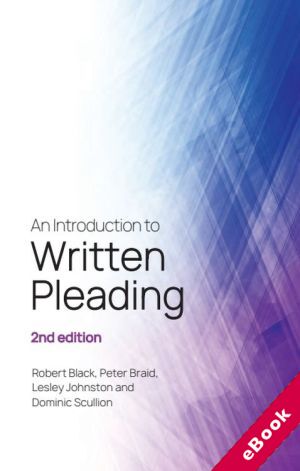
A practical guide to drafting written pleadings in Scottish civil courts.
Every civil action raised in a Scottish court is initiated by written pleadings, which set out the remedy sought, the facts and the propositions in law.
Drawing on the authors’ combined expertise and wealth of experience as civil court judges and practitioners, this book provides a practical guide to drafting and responding to pleadings. More than that, it provides tips for the drafter on approaching their case analysis and on the factual investigations to be carried out before the drafting begins.
Whether you are a student undertaking the Diploma in Professional Legal Practice, a trainee solicitor, a devil advocate or a civil court practitioner, this book will provide you with the essential principles and rules of good pleading and will steer you away from common pitfalls and judicial criticism. Like the first edition before it, it does so with a light-hearted touch and (with poor attempts at) humour.
Coverage includes drafting the initial writ/summons, drafting the defences, adjusting pleadings, amending pleadings, special causes (such as personal injuries actions, commercial actions, family actions, petitions and summary applications), ethical pleading and a chapter devoted to avoiding the pitfalls.