
The eBooks we sell are sold as a single-user licence and are intended for the end user only.
The sale of some eBooks are restricted to certain countries. To alert you to such restrictions, please select the country of the billing address of your credit or debit card you wish to use for payment.
For further information see https://www.wildy.com/ebook-formats
Once the order is confirmed an e-mail will be sent to you to allow you to download the eBook. For UK purchases this will be automatic. For purchases outside the UK a member of staff will need to confirm the sale. (Staff are available to do this during normal business hours, Mon-Fri 8:30-17:00 UK time)
All eBooks are supplied firm sale and cannot be returned. If you believe there is a fault with your eBook then contact us on ebooks@wildy.com and we will help in resolving the issue. This does not affect your statutory rights.
In 1989, when the Cold War ended, there were six permanent international courts. Today there are more than two dozen that have collectively issued over thirty-seven thousand binding legal rulings.
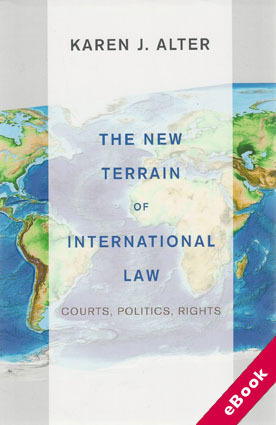
The New Terrain of International Law charts the developments and trends in the creation and role of international courts, and explains how the delegation of authority to international judicial institutions influences global and domestic politics.
The New Terrain of International Law presents an in-depth look at the scope and powers of international courts operating around the world. Focusing on dispute resolution, enforcement, administrative review, and constitutional review, Karen Alter argues that international courts alter politics by providing legal, symbolic, and leverage resources that shift the political balance in favor of domestic and international actors who prefer policies more consistent with international law objectives. International courts name violations of the law and perhaps specify remedies.
Alter explains how this limited power - the power to speak the law - translates into political influence, and she considers eighteen case studies, showing how international courts change state behavior. The case studies, spanning issue areas and regions of the world, collectively elucidate the political factors that often intervene to limit whether or not international courts are invoked and whether international judges dare to demand significant changes in state practices.










