
The eBooks we sell are sold as a single-user licence and are intended for the end user only.
The sale of some eBooks are restricted to certain countries. To alert you to such restrictions, please select the country of the billing address of your credit or debit card you wish to use for payment.
For further information see https://www.wildy.com/ebook-formats
Once the order is confirmed an e-mail will be sent to you to allow you to download the eBook. For UK purchases this will be automatic. For purchases outside the UK a member of staff will need to confirm the sale. (Staff are available to do this during normal business hours, Mon-Fri 8:30-17:00 UK time)
All eBooks are supplied firm sale and cannot be returned. If you believe there is a fault with your eBook then contact us on ebooks@wildy.com and we will help in resolving the issue. This does not affect your statutory rights.
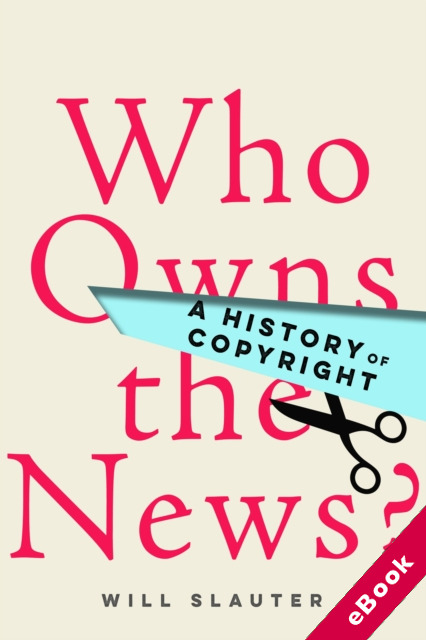
You can't copyright facts, but is news a category unto itself? Without legal protection for the "ownership" of news, what incentive does a news organization have to invest in producing quality journalism that serves the public good?
This book explores the intertwined histories of journalism and copyright law in the United States and Great Britain, revealing how shifts in technology, government policy, and publishing strategy have shaped the media landscape.
Publishers have long sought to treat news as exclusive to protect their investments against copying or "free riding." But over the centuries, arguments about the vital role of newspapers and the need for information to circulate have made it difficult to defend property rights in news.
Beginning with the earliest printed news publications and ending with the Internet, Will Slauter traces these countervailing trends, offering a fresh perspective on debates about copyright and efforts to control the flow of news.










