
The eBooks we sell are sold as a single-user licence and are intended for the end user only.
The sale of some eBooks are restricted to certain countries. To alert you to such restrictions, please select the country of the billing address of your credit or debit card you wish to use for payment.
For further information see https://www.wildy.com/ebook-formats
Once the order is confirmed an e-mail will be sent to you to allow you to download the eBook. For UK purchases this will be automatic. For purchases outside the UK a member of staff will need to confirm the sale. (Staff are available to do this during normal business hours, Mon-Fri 8:30-17:00 UK time)
All eBooks are supplied firm sale and cannot be returned. If you believe there is a fault with your eBook then contact us on ebooks@wildy.com and we will help in resolving the issue. This does not affect your statutory rights.
Due to a technical issue some ebooks are not available to order.
In his seminal work on Emotional Intelligence, Daniel Goleman suggests that the common view of human intelligence is far too narrow and that emotions play a much greater role in thought, decision-making and individual success than is commonly acknowledged.
The importance of emotion to human experience cannot be denied, yet the relationship between law and emotions is one that has largely been ignored until recent years. However, the last two decades have seen a rapidly expanding interest among scholars of all disciplines into the way in which law and the emotions interact, including the law's response to emotion and the extent to which emotions pervade the practice of the law.
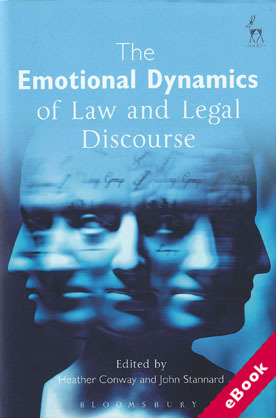
In The Emotional Dynamics of Law and Legal Discourse a group of leading scholars from both sides of the Atlantic explore these issues across key areas of private law, public law, criminal justice and dispute resolution, illustrating how emotion infuses all areas of legal thought.
The collection argues for a more positive view of the role of emotions in the context of legal discourse and demonstrates ways in which the law could, in the words of Goleman, become more emotionally intelligent.










