The eBooks we sell are sold as a single-user licence and are intended for the end user only.
The sale of some eBooks are restricted to certain countries. To alert you to such restrictions, please select the country of the billing address of your credit or debit card you wish to use for payment.
For further information see https://www.wildy.com/ebook-formats
Once the order is confirmed an e-mail will be sent to you to allow you to download the eBook. For UK purchases this will be automatic. For purchases outside the UK a member of staff will need to confirm the sale. (Staff are available to do this during normal business hours, Mon-Fri 8:30-17:00 UK time)
All eBooks are supplied firm sale and cannot be returned. If you believe there is a fault with your eBook then contact us on ebooks@wildy.com and we will help in resolving the issue. This does not affect your statutory rights.
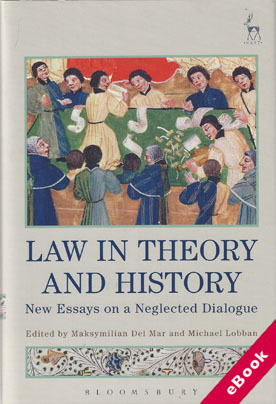
This collection of original essays bringing together leading legal historians and theorists to explore the oft-neglected but important relationship between these two discplines. Legal historians have often been sceptical of theory.
The methodology which informs their own work is often said to be an empirical one, of gathering information from the archives and presenting it in a narrative form. The narrative produced by history is often said to be provisional, insofar as further research in the archives might falsify present understandings and demand revisions.
On the other side, legal theorists are often dismissive of historical works. History itself seems to many theorists not to offer any jurisprudential insights of use for their projects: at best, history is a repository of data and examples, which may be drawn on by the theorist for her own purposes.
The aim of this collection is to invite participants from both sides to ask what lessons legal history can bring to legal theory, and what legal theory can bring to history. What is the theorist to do with the empirical data generated by archival research? What theories should drive the historical enterprise, and what wider lessons can be learned from it? This collection brings together a number of major theorists and legal historians to debate these ideas.