
The eBooks we sell are sold as a single-user licence and are intended for the end user only.
The sale of some eBooks are restricted to certain countries. To alert you to such restrictions, please select the country of the billing address of your credit or debit card you wish to use for payment.
For further information see https://www.wildy.com/ebook-formats
Once the order is confirmed an e-mail will be sent to you to allow you to download the eBook. For UK purchases this will be automatic. For purchases outside the UK a member of staff will need to confirm the sale. (Staff are available to do this during normal business hours, Mon-Fri 8:30-17:00 UK time)
All eBooks are supplied firm sale and cannot be returned. If you believe there is a fault with your eBook then contact us on ebooks@wildy.com and we will help in resolving the issue. This does not affect your statutory rights.
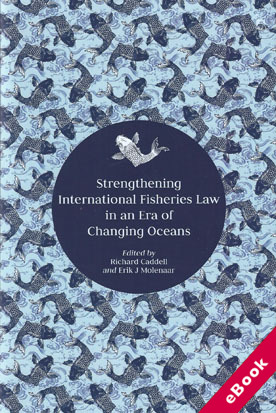
This collection addresses the central question of how the current international framework for the regulation of fisheries may be strengthened in order to meet the challenges posed by dramatically changing ocean conditions.
Following the adoption of the UN Convention on the Law of the Sea 1982 and its broad provisions concerning entitlements to fisheries resources, the international framework for the governance of marine capture fisheries has developed significantly. The pace of development increased significantly after the coming into force of three key global fisheries instruments: namely the 1993 Compliance Agreement, the 1995 UN Fish Stocks Agreement (Fish Stocks Agreement) and the 1995 Code of Conduct.
This book assesses the effectiveness of these laws in light of the current status of fish stocks, fisheries and oceans and predictions on their future, in particular in the context of climate change. Featuring contributions from experts in the fields of fisheries management, it takes an interdisciplinary approach to provide a fuller context to the legal, policy and managerial issues raised.
Rigorous and comprehensive in scope, this will be required reading for those lawyers and non-lawyers interested fisheries regulation.










