
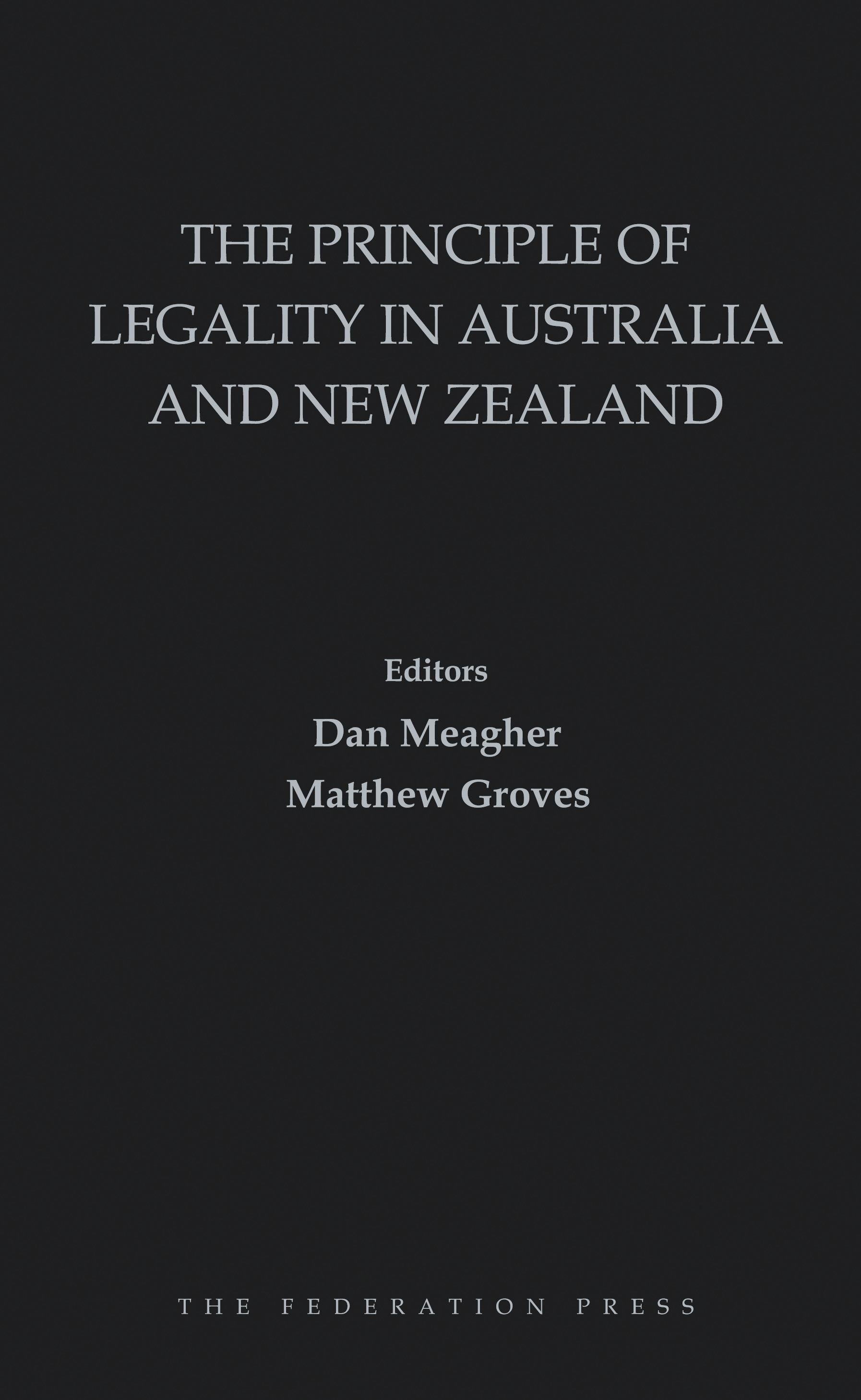
In this age of statutes and human rights the common law principle of legality has assumed a central importance. The principle holds that unless Parliament makes unmistakably clear its intention to curtail or abrogate a common law right, freedom or principle, the courts will not construe a statute as having that operation. As Lord Hoffmann famously observed, this “means that Parliament must squarely confront what it is doing and accept the political cost”.
The principle of legality is now central to the operation of Australian and New Zealand public law. Yet its content, methodology and scope remain elusive and has never been examined in detail. This book fills that gap by drawing together leading judges, practitioners and scholars to explore a range of interesting issues and challenges for the application of the principle of legality and its future trajectory: How does the principle operate? Which rights and freedoms fall within its scope and why? What is its relationship to the (so-called) common law bill of rights? Has proportionality a role to play in its application? How, if at all, does it differ from the presumption with international law? And in the construction of statutes does the principle serve to fulfil or frustrate the will of Parliament?










