
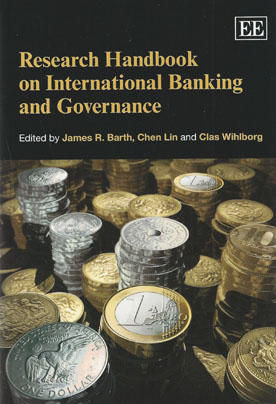
The recent financial crisis has stimulated much debate on the governance of financial institutions, as well as research on the effects of governance arrangements on risk-taking, performance and financial institutions more generally. Furthermore, researchers are asking how regulation, legislation, politics and other factors influence the governance of financial institutions and their behavior in different dimensions. The specially commissioned contributions featured in this timely Handbook confront these complex issues.
The contributors – top international scholars from finance, law and business – explore the role of governance, both internal and external, in explaining risk-taking and other aspects of the behavior of financial institutions. Additionally, they discuss market and policy features affecting objectives and quality of governance. The chapters provide in-depth analysis of factors such as: ownership, efficiency and stability; market discipline; compensation and performance; social responsibility; and governance in non-bank financial institutions. Only through this kind of rigorous examination can one hope to implement the financial reforms necessary and sufficient to reduce the likelihood and severity of future crises.
Bringing the reader to the frontier of research on governance of financial institutions, this volume is sure to inspire future research in scholars and students of financial institutions, governance and banking. Practitioners in financial institutions and public regulatory and supervisory authorities will also find much of value and insight in this book.










