
The eBooks we sell are sold as a single-user licence and are intended for the end user only.
The sale of some eBooks are restricted to certain countries. To alert you to such restrictions, please select the country of the billing address of your credit or debit card you wish to use for payment.
For further information see https://www.wildy.com/ebook-formats
Once the order is confirmed an e-mail will be sent to you to allow you to download the eBook. For UK purchases this will be automatic. For purchases outside the UK a member of staff will need to confirm the sale. (Staff are available to do this during normal business hours, Mon-Fri 8:30-17:00 UK time)
All eBooks are supplied firm sale and cannot be returned. If you believe there is a fault with your eBook then contact us on ebooks@wildy.com and we will help in resolving the issue. This does not affect your statutory rights.
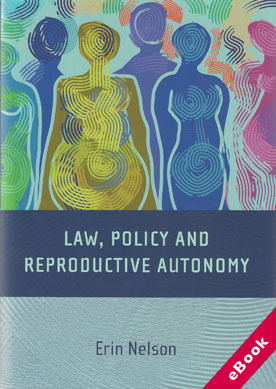
Reproductive choices are at once the most private and intimate decisions we make in our lives and undeniably also among the most public. Reproductive decision making takes place in a web of overlapping concerns - political and ideological, socio-economic, health and health care - all of which engage the public and involve strongly held opinions and attitudes about appropriate conduct on the part of individuals and the state.
Reproductive Autonomy and the Regulation of Reproduction examines the idea of reproductive autonomy, noting that in attempting to look closely at the contours of the concept, we begin to see some uncertainty about its meaning and legal implications - about how to understand reproductive autonomy and how to value it. Both mainstream and feminist literature about autonomy contribute valuable insights into the meaning and implications of reproductive autonomy.
The developing feminist literature on relational autonomy provides a useful starting point for a contextualised conception of reproductive autonomy that creates the opportunity for meaningful exercise of reproductive choice. With a contextualised approach to reproductive autonomy as a backdrop, the book traces the regulation of reproduction in Canadian, English, US and Australian law and policy, arguing that not all reproductive decisions necessarily demand the same level of deference in law and policy, and making recommendations for reform.










