
The eBooks we sell are sold as a single-user licence and are intended for the end user only.
The sale of some eBooks are restricted to certain countries. To alert you to such restrictions, please select the country of the billing address of your credit or debit card you wish to use for payment.
For further information see https://www.wildy.com/ebook-formats
Once the order is confirmed an e-mail will be sent to you to allow you to download the eBook. For UK purchases this will be automatic. For purchases outside the UK a member of staff will need to confirm the sale. (Staff are available to do this during normal business hours, Mon-Fri 8:30-17:00 UK time)
All eBooks are supplied firm sale and cannot be returned. If you believe there is a fault with your eBook then contact us on ebooks@wildy.com and we will help in resolving the issue. This does not affect your statutory rights.
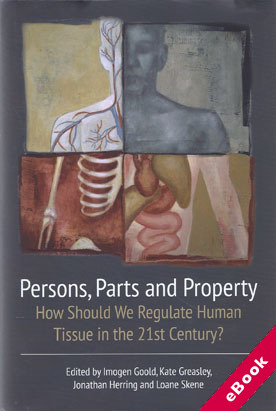
The debate over whether human bodies and their parts should be governed by the laws of property has accelerated with the pace of technological change.
The common law first recognised that there could be a property interest in human tissue in some circumstances in the early 1900s, but it was not until a string of judicial decisions and statutory regulation in the 1990s and early 2000s that the place of this 'exception' was cemented.
The 2009 decision of the Court of Appeal of England and Wales in Yearworth & Ors v North Bristol NHS Trust added a new dimension to the debate by supporting a move towards a broader, more principled basis for finding (or rejecting) property rights in human tissue. However, the law relating to property of human bodies and their parts remains highly contested.
The contributions in this volume represent a collation of the broad spectrum of analyses on offer, and a detailed exploration of the salient legal and theoretical puzzles arising out of the body-as-property question.










