
The eBooks we sell are sold as a single-user licence and are intended for the end user only.
The sale of some eBooks are restricted to certain countries. To alert you to such restrictions, please select the country of the billing address of your credit or debit card you wish to use for payment.
For further information see https://www.wildy.com/ebook-formats
Once the order is confirmed an e-mail will be sent to you to allow you to download the eBook. For UK purchases this will be automatic. For purchases outside the UK a member of staff will need to confirm the sale. (Staff are available to do this during normal business hours, Mon-Fri 8:30-17:00 UK time)
All eBooks are supplied firm sale and cannot be returned. If you believe there is a fault with your eBook then contact us on ebooks@wildy.com and we will help in resolving the issue. This does not affect your statutory rights.
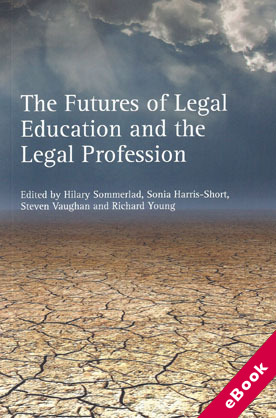
We are currently witnessing an unprecedented transformation in the legal profession and legal education. The Legal Services Act 2007 and the Legal Aid, Sentencing, Prisoners and Offenders Act 2013 have both enabled and necessitated dramatic structural changes to the profession, as well as impacting on its ethos and ethicality.
The recent Legal Education and Training Review (LETR) promises similarly dramatic change to the provision of legal education, reflecting the shifting landscape of both the legal professional market and Higher Education in general. These transformative changes bring both exciting opportunities and challenges with which everyone involved in the law – from University lecturers, to Senior Partners in leading law firms, to the judiciary – must grapple.
This edited collection comprises a selection of papers presented at the 2nd conference of CEPLER, Birmingham Law School's Centre for Professional Legal Education and Research. The aim of the Conference, and thus this collection, was to bring together leading academic scholars, senior figures from professional practice, policy-makers, and representatives of the regulatory authorities, to reflect on the key issues arising from this transformative moment. As such, this volume of essays covers diverse ground, from curriculum development to professional theory, enriched and enhanced by the range of backgrounds and perspectives of its contributors.










