
The eBooks we sell are sold as a single-user licence and are intended for the end user only.
The sale of some eBooks are restricted to certain countries. To alert you to such restrictions, please select the country of the billing address of your credit or debit card you wish to use for payment.
For further information see https://www.wildy.com/ebook-formats
Once the order is confirmed an e-mail will be sent to you to allow you to download the eBook. For UK purchases this will be automatic. For purchases outside the UK a member of staff will need to confirm the sale. (Staff are available to do this during normal business hours, Mon-Fri 8:30-17:00 UK time)
All eBooks are supplied firm sale and cannot be returned. If you believe there is a fault with your eBook then contact us on ebooks@wildy.com and we will help in resolving the issue. This does not affect your statutory rights.
Due to a technical issue some ebooks are not available to order.
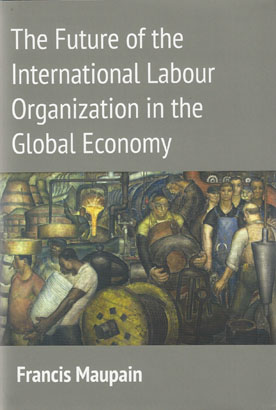
The International Labour Organization was created in 1919, as part of the Treaty of Versailles that ended World War I, to reflect the belief that universal and lasting peace can be accomplished only if it is based on social justice. As the oldest organization in the UN system, approaching its 100th birthday in 2019, the ILO faces unprecedented strains and challenges.
Since before the financial crisis, the global economy has tested the limits of a regulatory regime which was designed in 1919. The Organization's founders only charged it with balancing social progress with the constraints of an interconnected open economy, but gambled almost entirely on the tools of persuasion to ensure that this would happen. Whether that gamble is still capable of paying-off is the subject of this book, by a former ILO insider with an unrivalled knowledge of its work.
The book forms part of a broader inquiry into the relevance of founding institutional principles to today's context, and strives to show that the bet made on persuasion may yet pay off. In part, the text argues that there may be little alternative anyway, showing that the pathways to more binding solutions are fraught with difficulty. It also shows the ILO's considerable future potential for promoting effective, universal regulations by extending its tools of persuasion in as -yet insufficiently explored directions.
Starting with an examination of the how the organization's institutional context differs from 93 years ago, the author goes on to evaluate the prospects of numerous proposals put forward today, including the trade/labour linkage, but going beyond this.
As a case study in how strategic choices can be made under legal, social and institutional constraints, the book should be valuable not only to those with an interest in the ILO, but to anyone who studies international organization, labour law, law and society, or political economy.










