
The eBooks we sell are sold as a single-user licence and are intended for the end user only.
The sale of some eBooks are restricted to certain countries. To alert you to such restrictions, please select the country of the billing address of your credit or debit card you wish to use for payment.
For further information see https://www.wildy.com/ebook-formats
Once the order is confirmed an e-mail will be sent to you to allow you to download the eBook. For UK purchases this will be automatic. For purchases outside the UK a member of staff will need to confirm the sale. (Staff are available to do this during normal business hours, Mon-Fri 8:30-17:00 UK time)
All eBooks are supplied firm sale and cannot be returned. If you believe there is a fault with your eBook then contact us on ebooks@wildy.com and we will help in resolving the issue. This does not affect your statutory rights.
Due to a technical issue some ebooks are not available to order.
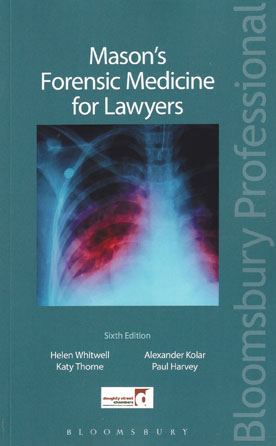
Mason’s Forensic Medicine for Lawyers covers all aspects of the relationship between forensic medicine and the law including an overview of general issues relating to medical ethics, criminal liability, negligence and the regulation of the medical profession.
The Court of Appeal and the Criminal Procedure Rules have dramatically changed what is expected of experts and the presentation of expert evidence to the Courts since the previous edition in 2008. The book considers each key stage from the reporting of the death to the investigation and diagnosis of the cause of death, detailing medical and legal considerations that must be taken into account. Each chapter begins with an explanation of basic medical issues including relevant anatomy, identifying controversies in the various forensic areas.
The sixth edition has been rewritten and restructured to provide a more analytical approach, with new chapters on the important areas of sexual offences and DNA, and expanded chapters on post-mortem examination to include explanation of the practicalities of an autopsy from the medical perspective.
It also includes coverage of the law and procedure surrounding the filming of post-mortems including examples of successful challenges to, and impugning of, post-mortems on the basis of techniques, inferences, expert evidence and public law challenges to the Coroners courts such as access; remit and limitations of inquiry.










