
The eBooks we sell are sold as a single-user licence and are intended for the end user only.
The sale of some eBooks are restricted to certain countries. To alert you to such restrictions, please select the country of the billing address of your credit or debit card you wish to use for payment.
For further information see https://www.wildy.com/ebook-formats
Once the order is confirmed an e-mail will be sent to you to allow you to download the eBook. For UK purchases this will be automatic. For purchases outside the UK a member of staff will need to confirm the sale. (Staff are available to do this during normal business hours, Mon-Fri 8:30-17:00 UK time)
All eBooks are supplied firm sale and cannot be returned. If you believe there is a fault with your eBook then contact us on ebooks@wildy.com and we will help in resolving the issue. This does not affect your statutory rights.
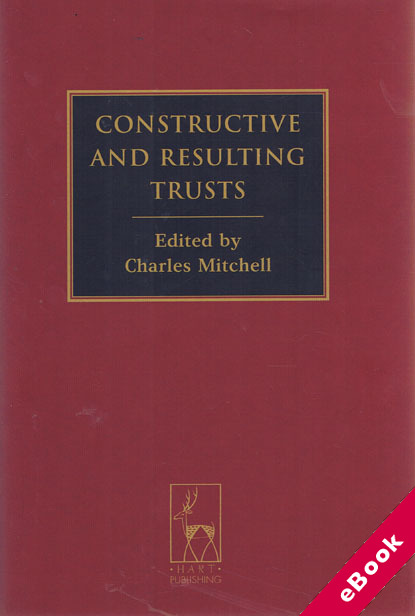
Constructive and resulting trusts have a long history in English law, and the law which governs them continues to develop as they are pressed into service to perform a wide variety of different functions, for example, to support the working of express trusts and other fiduciary relationships, to allocate family property rights, and to undo the consequences of commercial fraud.
However, while their conceptual flexibility makes them enormously useful, it also makes them hard to understand. In the twelve essays collected in this volume, the authors shed new light on various aspects of the law governing constructive and resulting trusts, revisiting current controversies, bringing new historical material to the fore, and offering new theoretical perspectives.










