
The eBooks we sell are sold as a single-user licence and are intended for the end user only.
The sale of some eBooks are restricted to certain countries. To alert you to such restrictions, please select the country of the billing address of your credit or debit card you wish to use for payment.
For further information see https://www.wildy.com/ebook-formats
Once the order is confirmed an e-mail will be sent to you to allow you to download the eBook. For UK purchases this will be automatic. For purchases outside the UK a member of staff will need to confirm the sale. (Staff are available to do this during normal business hours, Mon-Fri 8:30-17:00 UK time)
All eBooks are supplied firm sale and cannot be returned. If you believe there is a fault with your eBook then contact us on ebooks@wildy.com and we will help in resolving the issue. This does not affect your statutory rights.
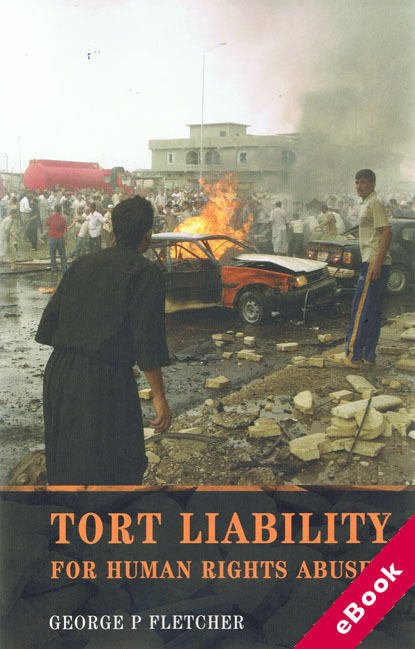
Advancing a bold theory of the relevance of tort law in the fight against human rights abuses, celebrated US law professor George Fletcher here challenges the community of international lawyers to think again about how they can use the Alien Tort Statute.
Beginning with an historical analysis Fletcher shows how tort and criminal law originally evolved to deal with similar problems, how tort came to be seen as primarily concerned with negligence, and how the Alien Tort Statute has helped establish the importance of tort law in international cases.
In a series of cases starting with Filartiga and culminating most recently in Sosa, Fletcher shows how torture cases led to the reawakening of the Alien Tort Statute, changing US law and giving legal practitioners a tool with which to assist victims of torture and other extreme human rights abuses. This leads to an examination of Agent Orange and the possible commission of war crimes in the course of its utliisation, and the theory of liability for aiding and abetting the American military and other mlitary forces when they commit war crimes.
The book concludes by looking at the cutting edge cases in this area, particularly those involving liiability for funding terrorism, and the remedies available, particularly the potential offered by the compensation chamber in the ICC.
Previously announced as Tort Liability for Civil Rights Abuses











