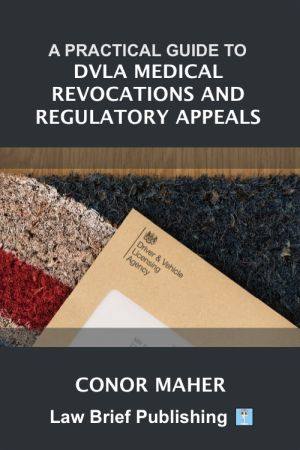
The revocation or refusal of a driving licence on medical grounds can have profound consequences for an individual’s livelihood, independence, and family life. Yet, the legal and regulatory framework governing DVLA medical decisions remains complex, drawing together primary legislation, secondary regulations, medical evidence, policy guidance, and specialist regulatory appellate procedure. For practitioners, navigating this area can be highly challenging, particularly given the limited specialist commentary and authority currently available.
A Practical Guide to DVLA Medical Revocations and Regulatory Appeals provides a useful and accessible guide for solicitors, barristers, and regulatory professionals advising clients affected by medical licensing decisions. Drawing upon the author’s experience acting in DVLA medical revocation cases, the book explains the legal basis for refusal and revocation, the operation of the DVLA’s medical guidance, the evidence relied upon by decision-makers, and the procedural routes available to challenge adverse decisions.
Using worked examples and detailed analysis of common conditions including epilepsy and seizures, psychiatric disorders, cognitive impairment, alcohol and drug-related cases, and visual disorders, the book demonstrates how the DVLA applies its guidance in practice and how practitioners can identify errors, develop evidence, and advance effective representations and appeals.
Covering every stage of a case from the initial revocation notice through to proceedings before the Magistrates’ Court, this book is designed as a practical reference for day-to-day practice. Whether advising on the prospects of a challenge, obtaining and analysing medical evidence, preparing representations to the DVLA, or conducting a statutory appeal, practitioners will find clear guidance, practical tips, and a structured framework for achieving effective outcomes for their clients.