The eBooks we sell are sold as a single-user licence and are intended for the end user only.
The sale of some eBooks are restricted to certain countries. To alert you to such restrictions, please select the country of the billing address of your credit or debit card you wish to use for payment.
For further information see https://www.wildy.com/ebook-formats
Once the order is confirmed an e-mail will be sent to you to allow you to download the eBook. For UK purchases this will be automatic. For purchases outside the UK a member of staff will need to confirm the sale. (Staff are available to do this during normal business hours, Mon-Fri 8:30-17:00 UK time)
All eBooks are supplied firm sale and cannot be returned. If you believe there is a fault with your eBook then contact us on ebooks@wildy.com and we will help in resolving the issue. This does not affect your statutory rights.
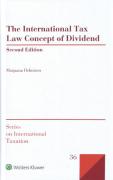
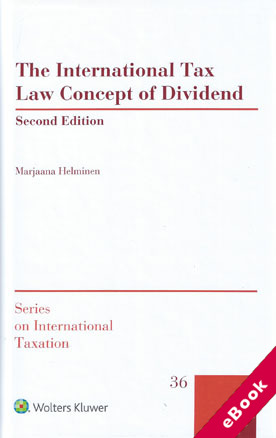
The International Tax Law Concept of Dividend is a unique work that discusses the international tax law rules determining which transactions may be classified and taxed as dividends and how possible classification conflicts may be resolved.
The distribution of profits between corporations’ residents in different jurisdictions gives rise to both significant tax planning opportunities and tax risks. As cross-border transactions between corporations grow in number and complexity, the question of how a profit distribution is classified for corporate income tax purposes becomes increasingly important, particularly in the context of issues such as double taxation, non-taxation and tax neutrality.
What’s in this book:-
This study covers different types of inter-corporate cross-border arrangements where an investor may receive a ‘dividend equivalent return’ directly from a corporate entity or indirectly through a third party. The author examines the tax classification of various inter-corporate transactions, including the following:-
The analysis of each transaction refers to international tax law. Most weight is given to tax treaties and EU tax law, including the base erosion and profit shifting (BEPS) development. The approaches adopted in different states’ national tax law are covered by a more general analysis.
The comprehensive coverage and the practical nature of this book make it an essential acquisition for tax practitioners, researchers and tax libraries worldwide.