
The eBooks we sell are sold as a single-user licence and are intended for the end user only.
The sale of some eBooks are restricted to certain countries. To alert you to such restrictions, please select the country of the billing address of your credit or debit card you wish to use for payment.
For further information see https://www.wildy.com/ebook-formats
Once the order is confirmed an e-mail will be sent to you to allow you to download the eBook. For UK purchases this will be automatic. For purchases outside the UK a member of staff will need to confirm the sale. (Staff are available to do this during normal business hours, Mon-Fri 8:30-17:00 UK time)
All eBooks are supplied firm sale and cannot be returned. If you believe there is a fault with your eBook then contact us on ebooks@wildy.com and we will help in resolving the issue. This does not affect your statutory rights.
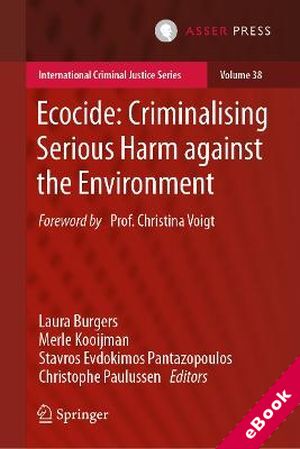
This book explores the concept of ecocide and critically assesses how the criminalisation of serious harm against the environment fits within international criminal law broadly construed. To this end, the book's chapters address four key questions: constitutes ecocide, can it be prosecuted, should it be prosecuted, and are its perpetrators and victims? In addition to more practice-focused chapters, including case studies on the Netherlands and Ukraine, the publication analyses and challenges fundamental conceptual issues, including the binary opposition between 'anthropocentrism' and 'ecocentrism' in the ecocide discourse. The reader is confronted with and forced to reflect on intriguing questions such as: is it fair to only prosecute representatives of large business corporations and state officials, while letting consumers of polluting products off the hook? And does the legal framework of the International Criminal Court (ICC) allow for the recognition of nonhumans, such as the environment, as victims of ecocide?
This edited volume is interesting for students, teachers, scholars, practitioners, policymakers and legislators. It aims to assist in fleshing out crucial parameters in the lead-up to the potential inclusion of the fifth core international crime in the Rome Statute of the ICC, as well as in relation to efforts to criminalise ecocide at the national level - both of which have gained unprecedented momentum in recent times.










