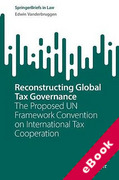
This book offers a pioneering critical assessment of the United Nations Framework Convention on International Tax Cooperation, adopted in principle by the UN General Assembly on 23 December 2024. Marking a pivotal step toward reconfiguring global tax governance, the Convention aims to establish a new legal foundation for international tax cooperation: one that prioritizes community interests such as sustainable development, equitable taxation, and respect for human rights.
Departing from the predominantly bilateral structure of existing tax frameworks, this book draws on the adopted United Nations Resolutions to evaluate the Convention's strengths, limitations, and transformative potential. Through both normative and practical analysis, the book explores whether this unprecedented development can foster a more coherent, inclusive, and just international tax system.: