The eBooks we sell are sold as a single-user licence and are intended for the end user only.
The sale of some eBooks are restricted to certain countries. To alert you to such restrictions, please select the country of the billing address of your credit or debit card you wish to use for payment.
For further information see https://www.wildy.com/ebook-formats
Once the order is confirmed an e-mail will be sent to you to allow you to download the eBook. For UK purchases this will be automatic. For purchases outside the UK a member of staff will need to confirm the sale. (Staff are available to do this during normal business hours, Mon-Fri 8:30-17:00 UK time)
All eBooks are supplied firm sale and cannot be returned. If you believe there is a fault with your eBook then contact us on ebooks@wildy.com and we will help in resolving the issue. This does not affect your statutory rights.
Due to a technical issue some ebooks are not available to order.
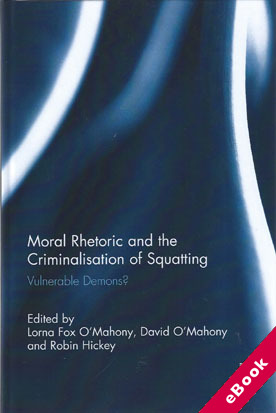
This collection of critical essays considers the criminalisation of squatting from a range of different theoretical, policy and practice perspectives. While the practice of squatting has long been criminalised in some jurisdictions, the last few years have witnessed the emergence of a newly constituted political concern with unlawful occupation of land.
With initiatives to address the ‘threat’ of squatting sweeping across Europe, the offence of squatting in a residential building was created in England in 2012. This development, which has attracted a large measure of media attention, has been widely regarded as a controversial policy departure, with many commentators, Parliamentarians, and professional organisations arguing that its support is premised on misunderstandings of the current law and a precarious evidence-base concerning the nature and prevalence of ‘squatting’.
Moral Rhetoric and the Criminalisation of Squatting explores the significance of measures to criminalise squatting for squatters, owners and communities. The book also interrogates wider themes relating to political philosophy, social policy, criminal justice and the nature of ownership, considering how the assimilation of squatting to a contemporary punitive turn is shaping the political, social, legal and moral landscapes of property, housing and crime.