The eBooks we sell are sold as a single-user licence and are intended for the end user only.
The sale of some eBooks are restricted to certain countries. To alert you to such restrictions, please select the country of the billing address of your credit or debit card you wish to use for payment.
For further information see https://www.wildy.com/ebook-formats
Once the order is confirmed an e-mail will be sent to you to allow you to download the eBook. For UK purchases this will be automatic. For purchases outside the UK a member of staff will need to confirm the sale. (Staff are available to do this during normal business hours, Mon-Fri 8:30-17:00 UK time)
All eBooks are supplied firm sale and cannot be returned. If you believe there is a fault with your eBook then contact us on ebooks@wildy.com and we will help in resolving the issue. This does not affect your statutory rights.
Due to a technical issue some ebooks are not available to order.
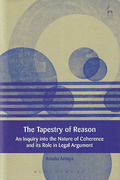
Legal reasoning settles morally pressing matters through a technique that largely bypasses open-ended moral argument. That technique makes central what certain persons validly decided in the past, for example in creating statutes, judicial resolutions, contracts, or wills.
Identifying valid decisions is a lawyerly skill and, echoing legal practice, legal philosophy has paid considerable attention to validity criteria. But it has neglected to explore validity's point: whether, and if so exactly how, the special technique of validity contributes to a legal system's ability to realise justice and human rights. Even the most sensible defences of the moral need for positive law have insufficiently probed this key step in the argument.
This book lays bare the workings of legal validity, and shows why, and within what general limits, this technique equips legal systems with privileged tools to foster human well-being. In so doing, the book explains how power-conferring norms setting out validity criteria endow agents' intentions with 'performative' effect ('I hereby...') and can secure the requirement of justice that there be widespread convergence on specific patterns of conduct shaped through a cooperative effort.
Legal meaning is accordingly systemic, resulting from the valid acts of multiple agents whose decisions can, by virtue of exercising legal power, also exercise moral power (authority).
In short, the book articulates why it is morally necessary that validity does not primarily turn on moral considerations.



Due to a technical issue some ebooks are not available to order.





Due to a technical issue some ebooks are not available to order.



Due to a technical issue some ebooks are not available to order.
Due to a technical issue some ebooks are not available to order.
Due to a technical issue some ebooks are not available to order.
Due to a technical issue some ebooks are not available to order.