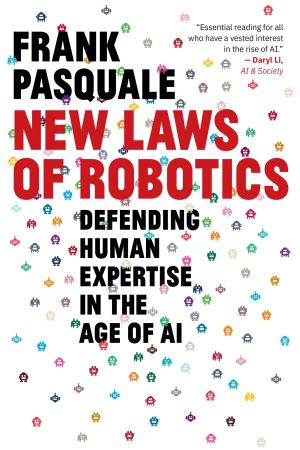
Too many CEOs tell a simple story about the future of work: if a machine can do what you do, your job will be automated, and you will be replaced. They envision everyone from doctors to soldiers rendered superfluous by ever-more-powerful AI.
Another story is possible. In virtually every walk of life, robotic systems can make labor more valuable, not less. Frank Pasquale tells the story of nurses, teachers, designers, and others who partner with technologists, rather than meekly serving as data sources for their computerized replacements. This cooperation reveals the kind of technological advance that could bring us all better health care, education, and more, while maintaining meaningful work. These partnerships also show how law and regulation can promote prosperity for all, rather than a zero-sum race of humans against machines.
Policymakers must not allow corporations or engineers alone to answer questions about how far AI should be entrusted to assume tasks once performed by humans, or about the optimal mix of robotic and human interaction. The kind of automation we get—and who it benefits—will depend on myriad small decisions about how to develop AI. Pasquale proposes ways to democratize that decision-making, rather than centralize it in unaccountable firms. Sober yet optimistic, New Laws of Robotics offers an inspiring vision of technological progress, in which human capacities and expertise are the irreplaceable center of an inclusive economy.