
Wildy Logo
(020) 7242 5778
enquiries@wildy.com

Book of the Month

Cover of McMeel on the Construction of Contracts: Interpretation, Implication and Rectification

McMeel on the Construction of Contracts: Interpretation, Implication and Rectification

Price: £225.00

Land Registration Manual
4th ed


 Ash Jones


Welcome to Wildys

Watch


Judicial Cooperation in Commercial Litigation 3rd ed (The British Cross-Border Financial Centre World)


 Ian Kawaley, David Doyle, Shade Subair Williams


Offers for Newly Called Barristers & Students

Special Discounts for Newly Called & Students

Read More ...


Secondhand & Out of Print

Browse Secondhand Online

Read More...


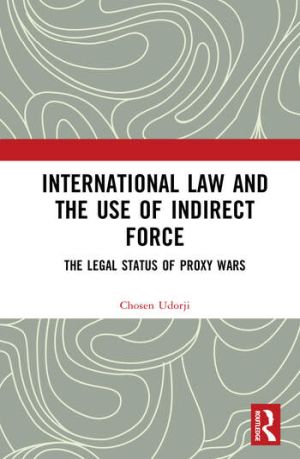
International Law and the Use of Indirect Force: The Legal Status of Proxy Wars


ISBN13: 9781041021452
To be Published: March 2026
Publisher: Routledge
Country of Publication: UK
Format: Hardback
Price: £145.00


This book critically examines the use of indirect force by states and the extent of its prohibition under international law. The indirect use of force by states – what are colloquially referred to as ‘proxy wars’ – has been steadily rising.

With the emergence of new modes of asymmetric warfare, the state's use of indirect force is gradually moving away from the covert style of the Cold War era to a more overt form. Despite such a shift, this state practice has received very little critical scrutiny and, as a result, its position within the existing international legal framework remains unclear. Viewing this practice through both doctrinal and critical–indeterminacy and TWAIL–theoretical lenses, this book argues that the current international law and jurisprudence on the meaning and scope of the use of indirect force is fundamentally inadequate and inadvertently suited to favour powerful states. Stressing the inherent weakness of positivist legal frameworks to address the tension between state sovereignty and state power, the book offers new tools for re-conceptualising the meaning and scope of the prohibition of indirect force under international law.

International Law and the use of Indirect Force will appeal to scholars and students with relevant interests in international law, international relations and politics, as well as practitioners working in conflict prevention and management

Subjects:
Public International Law
Contents:
Introduction
1. Reconceptualising the Meaning of Indirect Force Under International Law
2. Reassessing the Scope of the Prohibition of the Use of Indirect Force as a Form of Self-Defence Under International Law
3. Reassessing the Scope of the Prohibition of the Use of Indirect Force by States Under the UN Security Council Authorisation Model
4. Reassessing the Scope of the Prohibition of the Use of Indirect Force by 'Third States' in Civil Wars Under International Law
5. Reassessing the Scope of the Prohibition of the Use of Indirect Force for Humanitarian Purposes Under International Law
6. Conclusion







