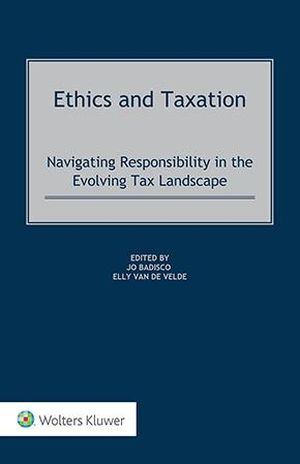
Ethics and Taxation, a welcome book, through interdisciplinary contributions from law, philosophy, sociology, and economics, is the first to deeply explore the ethical challenges present in today’s ever-more-complex domain of tax practice and regulation. Contemporary tax systems are increasingly marked by tensions between formal legality and broader expectations of fairness, responsibility, and the common good. The widening gap between legality and legitimacy has deepened public scepticism towards both taxpayers and the institutions tasked with enforcing tax law.
What’s in this book:
With the intent of raising awareness among tax professionals that many of the choices they make in their daily practice have a moral dimension – and that such choices must be made consciously and responsibly – the authors examine such contributing factors as the following:
The book offers a selection of the papers presented at an international and interdisciplinary conference organized by the Chair in Ethical Taxation at the Faculty of Law of Hasselt University in May 2024. Bridging theory and practice, ethical complexities are illustrated by concrete case studies and legislative examples, including Belgium’s idea on VAT receipt lottery, South Africa’s general anti-avoidance rule, and the Dutch Tax Governance Code.
How this will help you:
Demonstrating that a sustainable tax realm must be grounded in moral principles that inform – and not merely constrain – legal arrangements, the contributors collectively articulate a vision that taxation is a morally significant practice that can never be reduced to technical reasoning but requires practical wisdom. A wide range of professionals – including tax advisers, administrators, policymakers, academics, and (corporate) actors – will gain not only a deeper and more integrated understanding of how ethical reasoning can illuminate the grey areas created by legal ambiguity, discretion, and increasingly complex tax systems, but also learn how ethical theories and abstract concepts can be applied to their daily professional responsibilities in real-world tax scenarios, thereby strengthening their ability to make sound and responsible judgments.