We will be closed from 5pm BST on Friday 28th August 2026 for the late summer bank holiday, re-opening at 8.30am BST on Tuesday 1st September. Any orders placed during this period will be processed when we re-open.
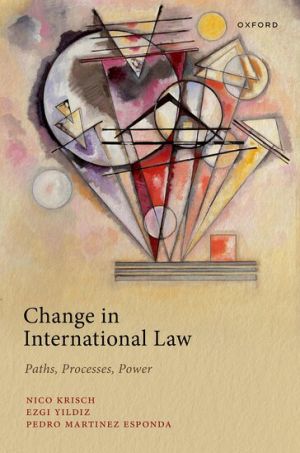
How does international law change? How does it adapt to new contexts and meet new challenges? The typical answer to these questions makes international law appear rather static, due to high hurdles for change and formal rules that require widespread agreement among states. In reality, however, change is far more common: new legal norms and understandings are generated constantly through the practices of legal actors.
This book explores these actual, often gradual processes of international legal change. Combining qualitative analysis and statistical examination of data derived from twenty-five cases across eight subfields, the book offers the most systematic study to date of international legal change in practice beyond treaty-making. It approaches international law as a discursive process characterized by distinctive, socially constructed communities and authorities, and identifies five distinct paths through which legal change occurs.
These paths shape who can act, how change is framed, and whether and under what conditions it gains traction, and they - and their relative weight - vary heavily across the different areas of international law. On these paths, change comes about in ways which defy common expectations of a state-centric international law: the analysis presented in the book shows that the success of change attempts depends less on broad state support or even the support of major powers, but to a greater extent on support from authorities and institutions in the respective fields. The result is an international law that may not be dynamic enough to cope with the speed of change in today's accelerated world, but one that is significantly more dynamic than is usually assumed.