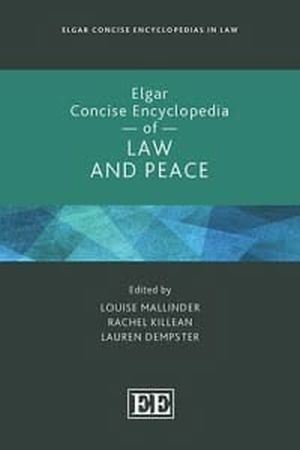
This pioneering Concise Encyclopedia analyses theoretical insights and global practice relating to the intersection between law and peace. It brings together over 140 international scholars and expert practitioners to explore the concepts, theories, actors, bodies of law and institutions within this essential area of scholarship.
Entries examine diverse topics including how law informs the practice of peace negotiation and peace mediation; the legal status of peace agreements; critical approaches to peacemaking drawn from indigenous, feminist, queer, environmental and TWAIL perspectives; legal protections for negotiators and mediators; the work of legal institutions in resolving disputes including international and regional courts and customary approaches to dispute resolution; and how law can inform the resolution of contested issues such as accountability, detainees, institutional reform, and governance. Covering a wide range of international law regimes, as well as elements of domestic and customary law, the Encyclopedia explores how law can foster or safeguard peace. It highlights gaps in this area of scholarship, as well as emerging approaches and practices.
The Elgar Concise Encyclopedia of Law and Peace is a vital resource for scholars and students of law, international relations, and peace and conflict studies. It is also beneficial for legal practitioners, policymakers, mediators, negotiators and NGOs.
Key Features: