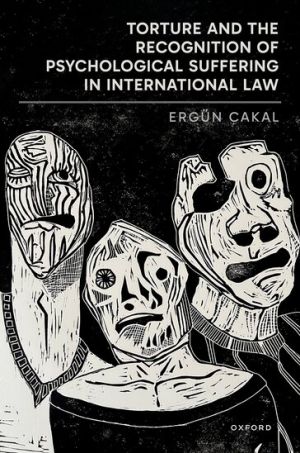
Torture and the Recognition of Psychological Suffering in International Law examines how and to what extent psychological suffering-or state violence not leaving overt physical marks-has been recognised under the prohibition of torture, inhuman and degrading treatment in international law. It systematically reviews interpretive practices across three authoritative adjudicatory bodies: the European Court of Human Rights, the Inter-American Court of Human Rights, and the United Nations Committee Against Torture. The book also draws on extensive interviews with advocates (applicant lawyers), adjudicators (judges and committee members) and institutional lawyers (senior registry or secretariat lawyers.)
Psychological suffering has, in broad terms, been recognised as falling within the prohibition from the inception of these three institutions. A closer analysis, however, also shows that it has never been specifically categorised as torture when standing on its own. Moreover, psychological suffering is often excluded altogether from the purview of the prohibition, either categorised instead as 'lawful sanctions' or as falling below the 'minimum level of severity' threshold, and therefore not found to be a violation. Doctrinal scholarship offers only limited explanations for this categorisation and exclusion, as evident in interpretive practice.
Ergün Cakal reveals numerous inter-related reasons for these practices: socio-political standards recognising the significance of psychological suffering are selectively applied or altogether overlooked; procedural pragmatism encourages caution and conservatism regarding categorisation; and scientific expertise documenting health impacts has not compelled adjudicators in all cases. Finally, interpretation often still depends on sense-centric reasoning (intuition-impression-empathy), potentially undercutting scientific evidence and perpetuating the preconception that severe suffering must be physical to be legally cognisable.