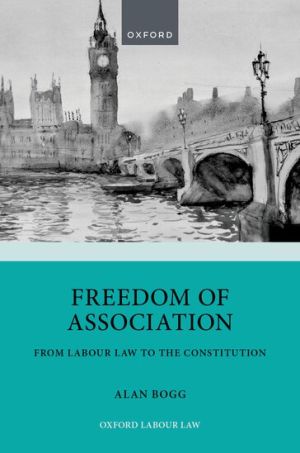
Freedom of association for workers and trade unions lies at the centre of labour law. Traditionally, trade union rights were structured through detailed labour codes governing organisation, collective bargaining, and the right to strike, with limited involvement from ordinary courts. This insulated labour law from common law principles and supported a mid-20th-century model built on assumptions of industrial equilibrium and political consensus. However, over the past five decades, deregulation and the erosion of collective bargaining have pushed workers and unions toward constitutional claims based on freedom of association to challenge restrictive labour laws.
This monograph explores the evolving encounter between labour law and human rights law in this domain. Focusing on the UK, the European Convention on Human Rights, and Canada, it analyses conflicts among employers, governments, and trade unions as courts increasingly adjudicate freedom-of-association claims. The book identifies a consistent judicial pattern distinguishing between the "individual" and "collective" dimensions of the right. In individual cases—such as victimisation by employers or unions-courts intervene to protect workers' equal moral standing, reflecting principles of equality before the law and non-discrimination. In collective cases—such as determining bargaining agents or the procedural rules governing strikes-courts generally defer to legislatures to preserve democratic autonomy in industrial relations.
Drawing on legal history and controversies surrounding trade union membership, collective bargaining, strikes, and the closed shop, the book defends a model of freedom of association that upholds both the dignity of workers and the structural autonomy of labour law.