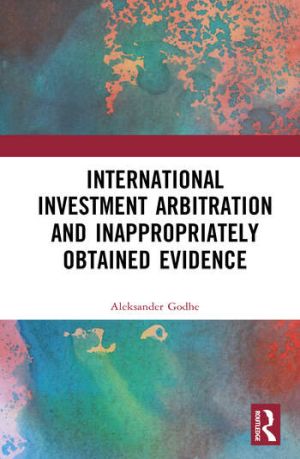
This book provides a comprehensive analysis of inappropriately obtained evidence in international investment arbitration, an increasingly pressing issue given technological advances and evolving notions of impropriety.
Despite the broad procedural discretion of investment tribunals, clear guidance on approaching inappropriately obtained evidence remains lacking, risking inconsistency and unfairness. To address this gap, the book proposes a structured evidentiary test, drawing on doctrinal, empirical and comparative analyses. It examines relevant case law from investment arbitration, international courts and domestic tribunals, alongside key legal principles such as evidentiary discretion and tribunal duties. Beyond theory, the book provides tribunals with a practical framework for approaching inappropriately obtained evidence, including the balancing of probative value with the degree of impropriety in evidence procurement. By situating its analysis within broader trends in investment arbitration, including state conduct and systemic reforms, this work serves as an essential resource for navigating one of the most challenging evidentiary issues.
The book will be of interest to practitioners and researchers in the field of international investment arbitration and beyond.,/p>