

Wildy Logo
(020) 7242 5778
enquiries@wildy.com

Book of the Month

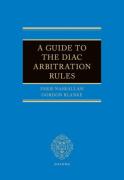
Cover of A Guide to the DIAC Arbitration Rules

A Guide to the DIAC Arbitration Rules

Price: £150.00

Planning Law:
A Practitioner's
Handbook 2nd ed


 William Webster, Robert Weatherley


Welcome to Wildys

Watch


Corporate Insolvency Practice:
Litigation, Procedure
and Precedents 3rd ed


 Mark Watson-Gandy


Offers for Newly Called Barristers & Students

Special Discounts for Newly Called & Students

Read More ...


Secondhand & Out of Print

Browse Secondhand Online

Read More...


Punishment and Moral Uncertainty: Seeking Convergence on Criminal Justice


ISBN13: 9781009538053
To be Published: October 2026
Publisher: Cambridge University Press
Country of Publication: UK
Format: Hardback
Price: £110.00


As Anglo-American legal systems face unsustainable levels of imprisonment, this book provides an ethical rationale for moving in a direction that pragmatic considerations already press us toward: reducing punitiveness. Every mainstream moral justification for criminal sanctions is subject to formidable objections, creating "moral uncertainty" about whether any single justification can adequately guide policymakers. Instead, this book defends 'The Convergence Approach' -- basing penal policy on areas of agreement between theories. This provides an ethical "safety net" so that even if one's preferred theory is flawed, another theory could still justify the policy.

The book also proposes a presumption against imposing sanctions of a severity that a reasonable theory would deem excessive, and emulating less punitive Nordic systems. It discusses moral/legal principles applicable across many jurisdictions, providing accessible, up-to-date, interdisciplinary, and topical discussions of the prisons crisis, penal theories, moral psychology, crime prevention, and victims' and offenders' rights.

Subjects:
Criminal Law, Jurisprudence
Contents:
1. Doubts about the justification of criminal sanctions
2. The epistemic challenge to retributivism
3. Evaluating retributivists' responses to the epistemic challenge
4. Expanding the scope of the epistemic argument to cover nonpunitive incapacitation
5. The convergence approach
6. Non-retributive safeguards of due process
7. Victims
8. Public protection and implementation
References
Index







