The eBooks we sell are sold as a single-user licence and are intended for the end user only.
The sale of some eBooks are restricted to certain countries. To alert you to such restrictions, please select the country of the billing address of your credit or debit card you wish to use for payment.
For further information see https://www.wildy.com/ebook-formats
Once the order is confirmed an e-mail will be sent to you to allow you to download the eBook. For UK purchases this will be automatic. For purchases outside the UK a member of staff will need to confirm the sale. (Staff are available to do this during normal business hours, Mon-Fri 8:30-17:00 UK time)
All eBooks are supplied firm sale and cannot be returned. If you believe there is a fault with your eBook then contact us on ebooks@wildy.com and we will help in resolving the issue. This does not affect your statutory rights.
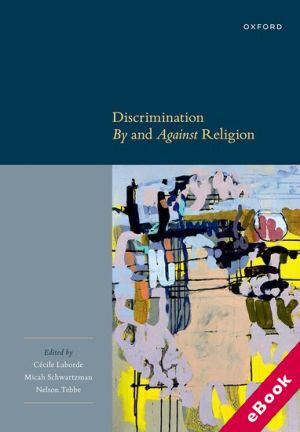
Conflicts involving religion and equality have been salient in many countries in recent years. Although such conflicts are far from new, they have taken new forms. This novelty is partly due to the rise of conservative populism and the way it correlates with religious affiliation, and partly due to local specificity. Whatever the cause, courts and lawmakers have developed new approaches to free exercise as clashes have shifted and intensified. And experts - in law, politics, religion, and philosophy - have kept pace by developing new frameworks for understanding such problems as well as new proposals for solutions.
At least two dynamics are in play: claims of discrimination by religious groups and claims of discrimination against them. On the one hand, religious actors seek exceptions from laws and policies that guarantee equality, while on the other hand, religious actors may seek the protection of antidiscrimination rules. These two dynamics together raise deep questions of political theory. Is religious freedom best conceptualized as a liberty right or as an equality right, or both? Exactly what kind of equality should be afforded to religious actors-protection against discriminatory intent, discriminatory effects, or something more powerful than either of these? Should religion be given special constitutional or political solicitude, as compared to secular conscientious commitments, or is such consideration itself unequal and unwarranted?
This volume interrogates these questions from diverse perspectives, putting into conversation scholars who work in different fields of study and who live in various countries across Europe and North America. Together, its chapters capture the cutting edge of scholarship on questions of religion and equality.
Chapter 16 of this work is available under the terms of a CC BY-NC-ND 4.0 International open access licence. This part of the work is free to read on Oxford Academic and offered as a free PDF download from OUP and selected open access locations.