Wildy Logo
(020) 7242 5778
enquiries@wildy.com

Book of the Month

Cover of 4 Stone Buildings on Liquidators

4 Stone Buildings on Liquidators

Edited by: Andrew de Mestre KC
Price: £289.00

Effective Written Advocacy:
A Guide for
Practitioners 3rd


 Andrew Goodman


Welcome to Wildys

Watch


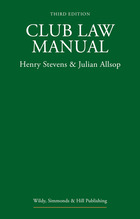
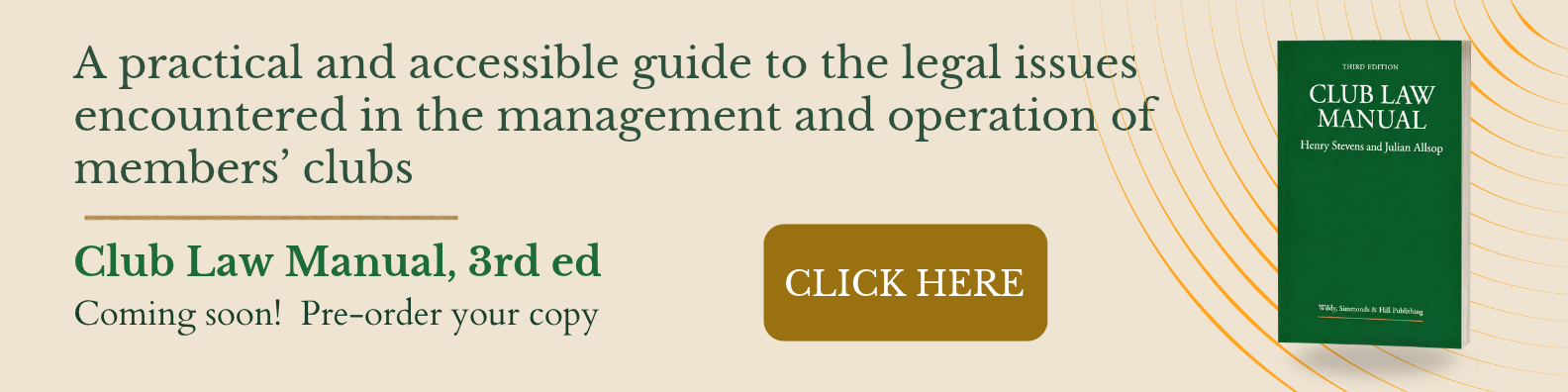
Club Law Manual
3rd ed


 Henry Stevens
Julian Allsop


Offers for Newly Called Barristers & Students

Special Discounts for Newly Called & Students

Read More ...


Academic Freedom and Authoritarianism: Global Lessons from Hungary

Edited by: Nora Chronowski, Konrad Lachmayer, Andras L. Pap

ISBN13: 9781509995707
To be Published: August 2027
Publisher: Hart Publishing
Country of Publication: UK
Format: Hardback
Price: £95.00


This book explores the challenges to academic freedom posed by authoritarianism, populism and illiberalism.

Privatisation, funding cuts and the establishment of sham institutions are just some of the tools used by authoritarian governments to exert pressure on scholars and their institutions. It addresses these challenges and presents an interdisciplinary view of the decline of academic freedom in Hungary. Using a comparative constitutional law approach, it contrasts these developments with key case studies from around the world, including the United States, Israel, Australia, Latin America and Southeast Asia.

The book offers an in-depth analysis of the dramatic situation of academic institutions in Hungary. It focuses on the interrelationship between the European Union and Hungary as well as on the financial and institutional mechanisms used to suppress academics. Recent international developments show how the Hungarian example has influenced other governments, particularly in the United States. Institutional and individual challenges to academic freedom are evident worldwide, as reflected with international comparative examples in the book. The constitutional comparison provides recommendations on ways to promote resilience.


Subjects:
Comparative Law, European Jurisdictions, Hungary
Contents:
Part One: The Concept of Academic Freedom
1. Introduction: Empirical Evidence and Constitutional Challenges
Konrad Lachmayer (Sigmund Freud University, Austria) and András L. Pap (Eötvös-Loránd-Universität, Hungary)
2. The Role of Academic Freedom for Democracies in a Multilayered Perspective
Konrad Lachmayer and Eleonóra Wagenknecht (Sigmund Freud University, Austria)
3. Framing Academic Freedom
András L. Pap (Eötvös-Loránd-Universität, Hungary)

Part Two: The Hungarian Case Study
4. Domestic and Multilevel Constitutional Protections, and the Academic Defund Dilemma in the Light of the EU's Rule of Law Sanctions
Nóra Chronowski (Eötvös-Loránd-Universität, Hungary)
5. The Dangers of Shallow Conditionality in Academia: Institutions in the Service of an Authoritarian Turn
Zsolt Körtvélyesi (Central European University, Austria)
6. The Facade of Privatisation: Diverting Public Institutions under Political Control, and the Double-Edged Rhetoric of Entrepreneurial Management
Nóra Bán-Forgács ((Milton Friedman University, Hungary) and Zoltán Rónay (Eötvös-Loránd-Universität, Hungary)
7. Dissent and Mobilisation in a Populist Political Context: Academic Freedom as a Master Narrative
Attila Bartha and Pál Susánszky (Eötvös-Loránd-Universität, Hungary)

Part Three: Global Perspectives
8. US Perspective on Populism and Academic Freedom
Tom Ginsburg (University of Chicago, United States)
9. Academic Freedom in Israel: A Comparative Perspective
Tamar Hostovsky Brandes (Ono Academic College, Israel)
10. Australian Perspectives on Academic Freedom and Democracy
Adrienne Stone (University of Melbourne, Australia)
11. From the Outside: Understanding the Space for Academic Freedom in Asia
Maartje De Visser (SMU, Singapore)
12. Academic Freedom and Democratic Erosion: Reflections from Latin America
Raul Sanchez-Urribarri (La Trobe University, Australia)

Part Four: Comparative Synopsis
13. Repression and Resilience: Local Findings, Global Lessons
Konrad Lachmayer (SFU, Austria)