
The eBooks we sell are sold as a single-user licence and are intended for the end user only.
The sale of some eBooks are restricted to certain countries. To alert you to such restrictions, please select the country of the billing address of your credit or debit card you wish to use for payment.
For further information see https://www.wildy.com/ebook-formats
Once the order is confirmed an e-mail will be sent to you to allow you to download the eBook. For UK purchases this will be automatic. For purchases outside the UK a member of staff will need to confirm the sale. (Staff are available to do this during normal business hours, Mon-Fri 8:30-17:00 UK time)
All eBooks are supplied firm sale and cannot be returned. If you believe there is a fault with your eBook then contact us on ebooks@wildy.com and we will help in resolving the issue. This does not affect your statutory rights.
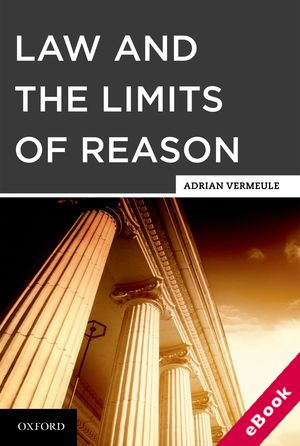
Human reason is limited. Given the scarcity of reason, how should the power to make constitutional law be allocated among legislatures, courts and the executive, and how should legal institutions be designed? In Law and the Limits of Reason, Adrian Vermeule denies the widespread view, stemming from Burke and Hayek, that the limits of reason counsel in favor of judges making "living" constitutional law in the style of the common law. Instead, he proposes and defends a "codified constitution" - a regime in which legislatures have the primary authority to develop constitutional law over time, through statutes and constitutional amendments.
Vermeule contends that precisely because of the limits of human reason, large modern legislatures, with their numerous and highly diverse memberships and their complex internal structures for processing information, are the most epistemically effective lawmaking institutions.











