
The eBooks we sell are sold as a single-user licence and are intended for the end user only.
The sale of some eBooks are restricted to certain countries. To alert you to such restrictions, please select the country of the billing address of your credit or debit card you wish to use for payment.
For further information see https://www.wildy.com/ebook-formats
Once the order is confirmed an e-mail will be sent to you to allow you to download the eBook. For UK purchases this will be automatic. For purchases outside the UK a member of staff will need to confirm the sale. (Staff are available to do this during normal business hours, Mon-Fri 8:30-17:00 UK time)
All eBooks are supplied firm sale and cannot be returned. If you believe there is a fault with your eBook then contact us on ebooks@wildy.com and we will help in resolving the issue. This does not affect your statutory rights.
Why do we consider incest wrong, even when it occurs between consenting adults unable to have children? Why are words that gross us out more likely to be deemed "obscene" and denied the protection of the First Amendment?
In a world where a gruesome photograph can decisively influence a jury and homosexual behavior is still condemned by some as "unnatural," it is worth asking: is our legal system really governed by the power of reason? Or do we allow a primitive human emotion, disgust, to guide us in our lawmaking?
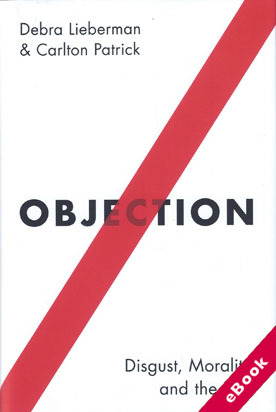
In Objection, psychologists Debra Lieberman and Carlton Patrick examine disgust and its impact on the legal system to show why the things that we find stomach-turning so often become the things that we render unlawful.
Shedding light on the evolutionary and psychological origins of disgust, the authors reveal how ancient human intuitions about what is safe to eat or touch, or who would make an advantageous mate, have become co-opted by moral systems designed to condemn behavior and identify groups of people ripe for marginalization.
Over time these moral stances have made their way into legal codes, and disgust has thereby served as the impetus for laws against behaviors almost universally held to be "disgusting" (corpse desecration, bestiality) - and as the implicit justification for more controversial prohibitions (homosexuality, use of pornography).
Written with a critical eye on current events, Lieberman and Patrick build a case for a more reasoned approach to lawmaking in a system that often confuses "gross" with "wrong."










