
The eBooks we sell are sold as a single-user licence and are intended for the end user only.
The sale of some eBooks are restricted to certain countries. To alert you to such restrictions, please select the country of the billing address of your credit or debit card you wish to use for payment.
For further information see https://www.wildy.com/ebook-formats
Once the order is confirmed an e-mail will be sent to you to allow you to download the eBook. For UK purchases this will be automatic. For purchases outside the UK a member of staff will need to confirm the sale. (Staff are available to do this during normal business hours, Mon-Fri 8:30-17:00 UK time)
All eBooks are supplied firm sale and cannot be returned. If you believe there is a fault with your eBook then contact us on ebooks@wildy.com and we will help in resolving the issue. This does not affect your statutory rights.
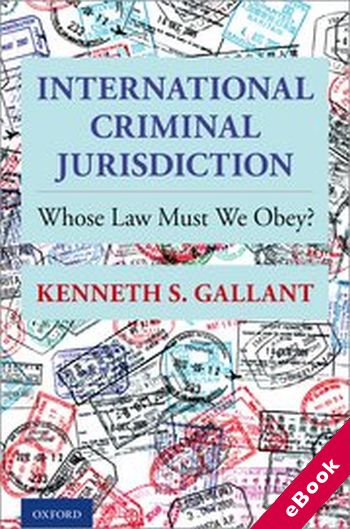
International Criminal Jurisdiction is a treatise for anyone conducting research into how domestic and international regimes create and enforce rules for personal and subject matter jurisdiction in transnational or international criminal cases. It is the only such treatise in English on this topic. Attorneys representing corporate executives in white collar criminal cases will be able to use this book to construct challenges to a foreign court's exercise of jurisdiction over those clients. Legal scholars wishing to critique foreign domestic courts for defying suppression treaties will find in this book information on how and why those courts are doing so. Law students will turn to this book for distinctions between international criminal tribunals and domestic courts in the exercise of personal jurisdiction over government officials. The book provides complete details on how domestic legislatures and the U.N. have created statutory and treaty-based rules expanding or even limiting courts' and tribunals' jurisdiction over certain crimes and certain categories of defendants. This research serves the book's function as a thorough guide to jurisdictional questions that arise when criminal acts or criminals cross borders. Questions include whether a defendant possesses standing to challenge an international tribunal's personal jurisdiction over him, what happens when a given domestic regime neglects to criminalize conduct prohibited by a new treaty, and why some domestic courts choose not to exercise extraterritorial jurisdiction.











