
The eBooks we sell are sold as a single-user licence and are intended for the end user only.
The sale of some eBooks are restricted to certain countries. To alert you to such restrictions, please select the country of the billing address of your credit or debit card you wish to use for payment.
For further information see https://www.wildy.com/ebook-formats
Once the order is confirmed an e-mail will be sent to you to allow you to download the eBook. For UK purchases this will be automatic. For purchases outside the UK a member of staff will need to confirm the sale. (Staff are available to do this during normal business hours, Mon-Fri 8:30-17:00 UK time)
All eBooks are supplied firm sale and cannot be returned. If you believe there is a fault with your eBook then contact us on ebooks@wildy.com and we will help in resolving the issue. This does not affect your statutory rights.
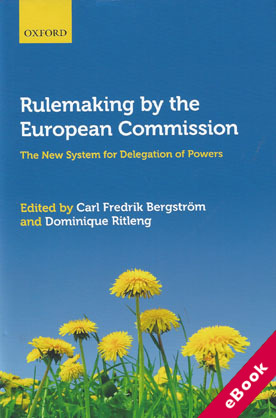
The last few years have seen major reforms to the delegation of powers and post-delegation supervision of the European Commission. In light of these reforms, Rulemaking by the European Commission: The New System for Delegation of Powers assesses whether the new system has really affected the old doctrine of delegation of powers, and if so, how?
Specific questions answered include: have the objectives of the reform been achieved and what were these objectives? How does the new system affect the division of functions between the institutions of the EU and the institutional balance? Has this new system affected the relationship between the EU and its Member States, and if so, how does it concern its citizens?
Presented by an interdisciplinary group of experts who have actively followed or participated in the process of reform, the book is structured in four parts: (1) the political and historical context in which the rule-making takes place, (2) the operation and functioning of the system before and after the reform, (3) the legal substance of a new framework for rule-making and the emerging case law from the Court of Justice of the EU, and (4) the procedural dimension, including the legal preconditions for non-institutional actors to participate.











