The eBooks we sell are sold as a single-user licence and are intended for the end user only.
The sale of some eBooks are restricted to certain countries. To alert you to such restrictions, please select the country of the billing address of your credit or debit card you wish to use for payment.
For further information see https://www.wildy.com/ebook-formats
Once the order is confirmed an e-mail will be sent to you to allow you to download the eBook. For UK purchases this will be automatic. For purchases outside the UK a member of staff will need to confirm the sale. (Staff are available to do this during normal business hours, Mon-Fri 8:30-17:00 UK time)
All eBooks are supplied firm sale and cannot be returned. If you believe there is a fault with your eBook then contact us on ebooks@wildy.com and we will help in resolving the issue. This does not affect your statutory rights.
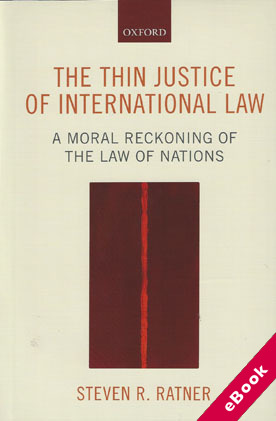
In a world full of armed conflict and human misery, global justice remains one of the most compelling missions of our time. Understanding the promises and limitations of global justice demands a careful appreciation of international law, the web of binding norms and institutions that help govern the behaviour of states and other global actors.
This book provides a new interdisciplinary approach to global justice, one that integrates the work and insights of international law and contemporary ethics. It asks whether the core norms of international law are just, appraising them according to a standard of global justice derived from the fundamental values of peace and the protection of human rights.
Through a combination of a careful explanation of the legal norms and philosophical argument, Ratner concludes that many international law norms meet such a standard of justice, even as distinct areas of injustice remain within the law and the verdict is still out on others.
Among the subjects covered in the book are the rules on the use of force, self-determination, sovereign equality, the decision making procedures of key international organizations, the territorial scope of human rights obligations (including humanitarian intervention), and key areas of international economic law. Ultimately, the book shows how an understanding of international law's moral foundations will enrich the global justice debate, while exposing the ethical consequences of different rules.