
The eBooks we sell are sold as a single-user licence and are intended for the end user only.
The sale of some eBooks are restricted to certain countries. To alert you to such restrictions, please select the country of the billing address of your credit or debit card you wish to use for payment.
For further information see https://www.wildy.com/ebook-formats
Once the order is confirmed an e-mail will be sent to you to allow you to download the eBook. For UK purchases this will be automatic. For purchases outside the UK a member of staff will need to confirm the sale. (Staff are available to do this during normal business hours, Mon-Fri 8:30-17:00 UK time)
All eBooks are supplied firm sale and cannot be returned. If you believe there is a fault with your eBook then contact us on ebooks@wildy.com and we will help in resolving the issue. This does not affect your statutory rights.
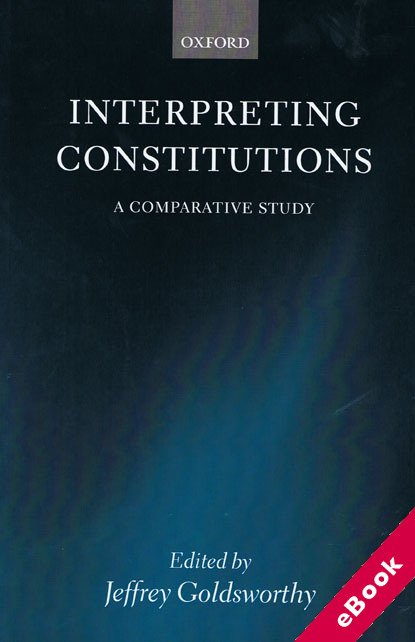
This book describes the constitutions of six major federations and how they have been interpreted by their highest courts, compares the interpretive methods and underlying principles that have guided the courts, and explores the reasons for major differences between these methods and principles.
Among the interpretive methods discussed are textualism, purposivism, structuralism and originalism. Each of the six federations is the subject of a separate chapter written by a leading authority in the field: Jeffrey Goldsworthy (Australia), Peter Hogg (Canada), Donald Kommers (Germany), S.P. Sathe (India), Heinz Klug (South Africa), and Mark Tushnet (United States). Each chapter describes not only the interpretive methodology currently used by the courts, but the evolution of that methodology since the constitution was first enacted. The book also includes a concluding chapter which compares these methodologies, and attempts to explain variations by reference to different social, historical, institutional and political circumstances.










