
The eBooks we sell are sold as a single-user licence and are intended for the end user only.
The sale of some eBooks are restricted to certain countries. To alert you to such restrictions, please select the country of the billing address of your credit or debit card you wish to use for payment.
For further information see https://www.wildy.com/ebook-formats
Once the order is confirmed an e-mail will be sent to you to allow you to download the eBook. For UK purchases this will be automatic. For purchases outside the UK a member of staff will need to confirm the sale. (Staff are available to do this during normal business hours, Mon-Fri 8:30-17:00 UK time)
All eBooks are supplied firm sale and cannot be returned. If you believe there is a fault with your eBook then contact us on ebooks@wildy.com and we will help in resolving the issue. This does not affect your statutory rights.
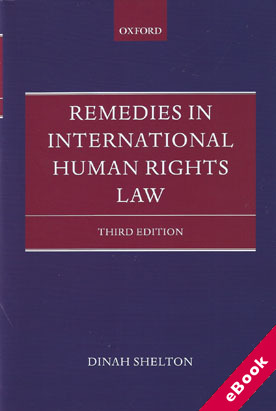
The fully revised and updated Third Edition of Remedies in International Human Rights Law provides a comprehensive analysis of the law governing international and domestic remedies for human rights violations.
It reviews and examines the texts and the jurisprudence on this key area of human rights law. It is an essential practical and theoretical resource for policymakers, scholars, and students negotiating and litigating issues of redress for victims.
The Third Edition incorporates the major developments in remedial human rights jurisprudence. Internationally, the United Nations and the International Criminal Court have issued reparations guidelines; the International Court of Justice has for the first time awarded compensation for human rights violations; the International Law Commission has considered the humanitarian responsibility of international organizations; and new international petition procedures and policies on redress have entered into force.
Regionally, in Asia and Africa, human rights bodies have adopted new human rights accords and legal judgments; in Europe, the human rights case load unceasingly increases. Nationally, the jurisprudence of historical reparations has come to the fore, as has the juridical consideration of economic and social rights.
All of these developments are analysed in context and create a comprehensive and accessible portrait of the state of remedial human rights law today.











