
The eBooks we sell are sold as a single-user licence and are intended for the end user only.
The sale of some eBooks are restricted to certain countries. To alert you to such restrictions, please select the country of the billing address of your credit or debit card you wish to use for payment.
For further information see https://www.wildy.com/ebook-formats
Once the order is confirmed an e-mail will be sent to you to allow you to download the eBook. For UK purchases this will be automatic. For purchases outside the UK a member of staff will need to confirm the sale. (Staff are available to do this during normal business hours, Mon-Fri 8:30-17:00 UK time)
All eBooks are supplied firm sale and cannot be returned. If you believe there is a fault with your eBook then contact us on ebooks@wildy.com and we will help in resolving the issue. This does not affect your statutory rights.
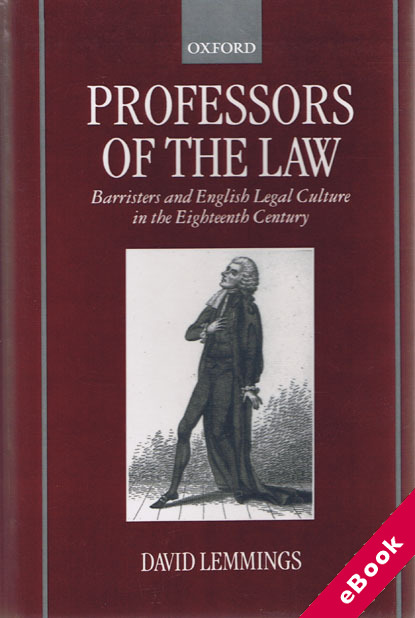
What happened to the culture of common law and English barristers in the 18th century? In this 'sequel' to Gentlemen and Barristers: The Inns of Court and the English Bar, 1680-1730, David Lemmings anatomizes the barristers and their world and also explores the popular reputation and self-image of the law and lawyers in the context of declining popular participation in litigation, increased parliamentary legislation, and the growth of the imperial state.
The author shows how the bar survived and prospered in a century of low recruitment and declining work, but failed to fulfil the expectations of an age of Enlightenment and Reform.
By contrast with the important role played by the common law, and lawyers, in 17th-century England and in colonial America, it appears that the culture and services of the barristers became marginalized as the courts concentrated on elite clients, and parliament became the primary point of contact between government and population.











