
The eBooks we sell are sold as a single-user licence and are intended for the end user only.
The sale of some eBooks are restricted to certain countries. To alert you to such restrictions, please select the country of the billing address of your credit or debit card you wish to use for payment.
For further information see https://www.wildy.com/ebook-formats
Once the order is confirmed an e-mail will be sent to you to allow you to download the eBook. For UK purchases this will be automatic. For purchases outside the UK a member of staff will need to confirm the sale. (Staff are available to do this during normal business hours, Mon-Fri 8:30-17:00 UK time)
All eBooks are supplied firm sale and cannot be returned. If you believe there is a fault with your eBook then contact us on ebooks@wildy.com and we will help in resolving the issue. This does not affect your statutory rights.
Due to a technical issue some ebooks are not available to order.
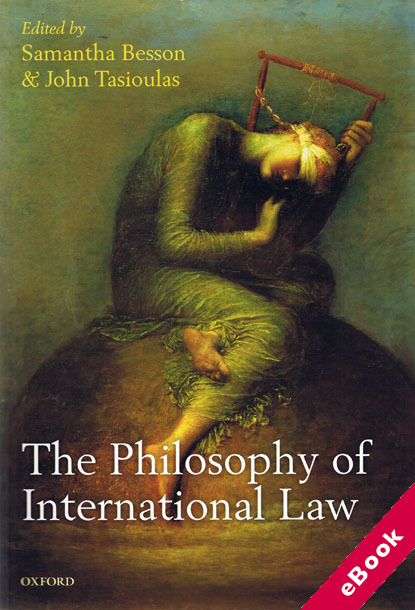
International law has recently emerged as the subject-matter of an exciting new field of philosophical investigation. The Philosophy of International Law contains 29 cutting-edge essays by leading philosophers and international lawyers, all published here in English for the first time, that address the central philosophical questions about international law.
The volume's overarching theme is the moral and political values that should guide the assessment and development of international law and institutions. Some of the essays tackle general topics such as the sources and legitimacy of international law, the nature of international legal adjudication, whether international law can or should aspire to be 'democratic', and the significance of state sovereignty.
The other contributions address philosophical problems arising in specific domains of international law, such as human rights law, international economic law, international criminal law, international environmental law, and the laws of war.
This volume is the most up-to-date and comprehensive treatment of the philosophy of international law in existence. It is also distinguished by its 'dialogical' methodology: there are two essays on each topic, with the second author engaging with the arguments of the first. It is an invaluable resource for anyone seeking a deeper understanding of the nature and value of international law.










