
The eBooks we sell are sold as a single-user licence and are intended for the end user only.
The sale of some eBooks are restricted to certain countries. To alert you to such restrictions, please select the country of the billing address of your credit or debit card you wish to use for payment.
For further information see https://www.wildy.com/ebook-formats
Once the order is confirmed an e-mail will be sent to you to allow you to download the eBook. For UK purchases this will be automatic. For purchases outside the UK a member of staff will need to confirm the sale. (Staff are available to do this during normal business hours, Mon-Fri 8:30-17:00 UK time)
All eBooks are supplied firm sale and cannot be returned. If you believe there is a fault with your eBook then contact us on ebooks@wildy.com and we will help in resolving the issue. This does not affect your statutory rights.
Due to a technical issue some ebooks are not available to order.
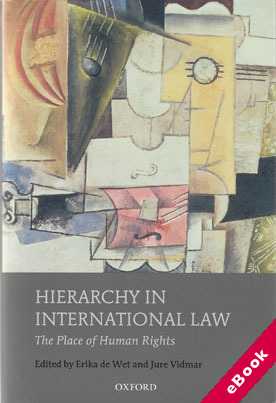
This book takes an inductive approach to the question of whether there is a hierarchy in international law, with human rights obligations trumping other duties.
It assesses the extent to which such a hierarchy can be said to exist through an analysis of the case law of national courts. Each chapter of the book examines domestic case law on an issue where human rights obligations conflict with another international law requirement, to see whether national courts gave precedence to human rights. If this is shown to be the case, it would lend support to the argument that the international legal order is moving toward a vertical legal system, with human rights at its apex.
In resolving conflicts between human rights obligations and other areas of international law, the practice of judicial bodies, both domestic and international, is crucial. Judicial practice indicates that norm conflicts typically manifest themselves in situations where human rights obligations are at odds with other international obligations, such as immunities; extradition and refoulement; trade and investment law; and environmental protection. This book sets out and analyses the relevant case law in all of these areas.










