
The eBooks we sell are sold as a single-user licence and are intended for the end user only.
The sale of some eBooks are restricted to certain countries. To alert you to such restrictions, please select the country of the billing address of your credit or debit card you wish to use for payment.
For further information see https://www.wildy.com/ebook-formats
Once the order is confirmed an e-mail will be sent to you to allow you to download the eBook. For UK purchases this will be automatic. For purchases outside the UK a member of staff will need to confirm the sale. (Staff are available to do this during normal business hours, Mon-Fri 8:30-17:00 UK time)
All eBooks are supplied firm sale and cannot be returned. If you believe there is a fault with your eBook then contact us on ebooks@wildy.com and we will help in resolving the issue. This does not affect your statutory rights.
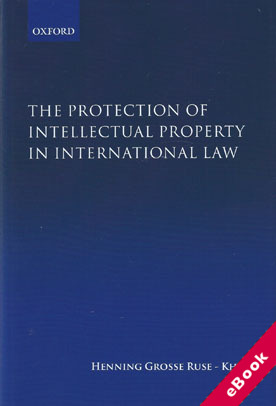
This book examines intellectual property (IP) protection in the broader context of international law. Against the background of the debate about norm relations within and between different rule systems in international law, it construes a holistic view of international IP law as an integral part of the international legal system.
It analyses the relationship of the two main IP conventions to the World Trade Organisation (WTO) Agreement on Trade Related Aspects of International Property Rights (TRIPS), as well as the relationship between TRIPS and Free Trade Agreements (FTAs).
The third part discusses alternative rule systems for the protection of IP in international law. The intellectual creations element of IP is captured by the concept of creator's rights in international human rights law; while the property aspect of IP is protected by international investment agreements and European human rights treaties.
Part Four focuses on three core intersections between the international IP system and other areas of international law related to environmental, social and economic concerns. The areas examined concern international law on trade, biological diversity and climate change. As in part three, the perspective taken is that of the 'other' area and how it perceives its relations with international IP norms.
In part five finally, the focus shifts back to the international IP system and the mechanisms it provides for taking into account the interests protected in other areas of international law.











