
The eBooks we sell are sold as a single-user licence and are intended for the end user only.
The sale of some eBooks are restricted to certain countries. To alert you to such restrictions, please select the country of the billing address of your credit or debit card you wish to use for payment.
For further information see https://www.wildy.com/ebook-formats
Once the order is confirmed an e-mail will be sent to you to allow you to download the eBook. For UK purchases this will be automatic. For purchases outside the UK a member of staff will need to confirm the sale. (Staff are available to do this during normal business hours, Mon-Fri 8:30-17:00 UK time)
All eBooks are supplied firm sale and cannot be returned. If you believe there is a fault with your eBook then contact us on ebooks@wildy.com and we will help in resolving the issue. This does not affect your statutory rights.
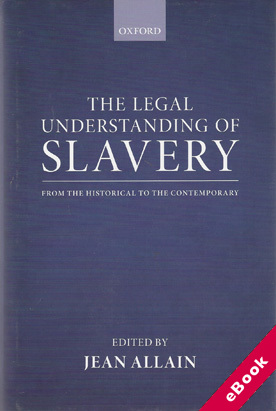
"Slavery is the status or condition of a person over whom any or all of the powers attaching to the right of ownership are exercised." So reads the legal definition of slavery agreed by the League of Nations in 1926.
Further enshrined in law during international negotiations in 1956 and 1998, this definition has been interpreted in different ways by the international courts in the intervening years. What can be considered slavery? Should forced labour be considered slavery? Debt-bondage? Child soldiering? Or forced marriage?
This book explores the limits of how slavery is understood in law. It shows how the definition of slavery in law and the contemporary understanding of slavery has continually evolved and continues to be contentious. It traces the evolution of concepts of slavery, from Roman law through the Middle Ages, the 18th and 19th centuries, up to the modern day manifestations, including manifestations of forced labour and trafficking in persons, and considers how the 1926 definition can distinguish slavery from lesser servitudes.
Together the contributors have put together a set of guidelines intended to clarify the law where slavery is concerned. The Bellagio-Harvard Guidelines on the Legal Parameters of Slavery, reproduced here for the first time, takes their shared understanding of both the past and present to project a consistent interpretation of the legal definition of slavery for the future.











