
The eBooks we sell are sold as a single-user licence and are intended for the end user only.
The sale of some eBooks are restricted to certain countries. To alert you to such restrictions, please select the country of the billing address of your credit or debit card you wish to use for payment.
For further information see https://www.wildy.com/ebook-formats
Once the order is confirmed an e-mail will be sent to you to allow you to download the eBook. For UK purchases this will be automatic. For purchases outside the UK a member of staff will need to confirm the sale. (Staff are available to do this during normal business hours, Mon-Fri 8:30-17:00 UK time)
All eBooks are supplied firm sale and cannot be returned. If you believe there is a fault with your eBook then contact us on ebooks@wildy.com and we will help in resolving the issue. This does not affect your statutory rights.
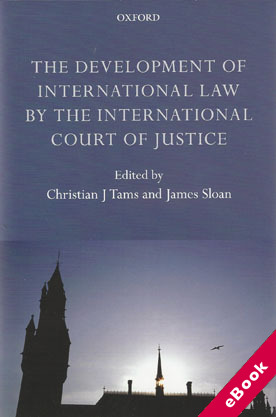
This book traces the impact that the International Court of Justice (ICJ), the principal judicial organ of the United Nations, has had on various areas of international law.
A number of prominent international experts examine whether, and to what extent, international law has been shaped by the Court's jurisprudence. The informal development of international law through the Court's judgments contrasts with the development of international law through more deliberate means, such as treaty-making.
Assessing key areas of international law over which the ICJ has exercised its jurisdiction, such as international environmental law, international human rights, the law of the sea, and the law of immunities, this book comprehensively details the impact of international jurisprudence on contemporary international law.
Continuing the work started by Sir Hersch Lauterpacht's influential book The Development of International Law by the Permanent Court of International Justice, this book provides key new insights into the role of the Court in wider international law. It makes required reading for anyone studying the ways in which international courts have in shaped the evolution of international law.










