
The eBooks we sell are sold as a single-user licence and are intended for the end user only.
The sale of some eBooks are restricted to certain countries. To alert you to such restrictions, please select the country of the billing address of your credit or debit card you wish to use for payment.
For further information see https://www.wildy.com/ebook-formats
Once the order is confirmed an e-mail will be sent to you to allow you to download the eBook. For UK purchases this will be automatic. For purchases outside the UK a member of staff will need to confirm the sale. (Staff are available to do this during normal business hours, Mon-Fri 8:30-17:00 UK time)
All eBooks are supplied firm sale and cannot be returned. If you believe there is a fault with your eBook then contact us on ebooks@wildy.com and we will help in resolving the issue. This does not affect your statutory rights.
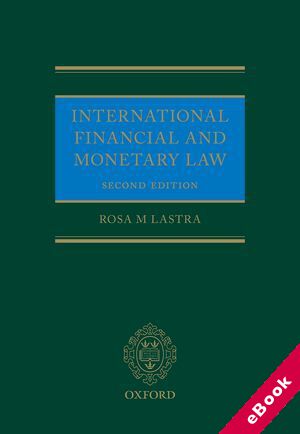
This book is a leading authority on central banking and financial regulation, including detailed legal and policy analysis of the institutions that safeguard monetary stability and financial stability nationally, at the EU level and globally.
The new edition has been renamed (previously Legal Foundations of International Monetary Stability) to better reflect the book's breadth of coverage, which includes an in-depth study of central banking, a fresh look at supervision, regulation and crisis management after the global financial crisis.
It also includes updated material on the law of the European Central Bank and banking union, the law of the IMF and work undertaken by international standard-setters, in particular the FSB and the Basel Committee.
Part I focuses on national developments, Part II deals with EU developments and Part III examines international developments. Each of these sections commences with a historical chapter, then analyses the framework of the 'monetary architecture'. Finally, each part considers the 'financial architecture' with regard to the functions of financial supervision (micro and macro) and surveillance, regulation and crisis management, including lender of last resort and resolution.











