
The eBooks we sell are sold as a single-user licence and are intended for the end user only.
The sale of some eBooks are restricted to certain countries. To alert you to such restrictions, please select the country of the billing address of your credit or debit card you wish to use for payment.
For further information see https://www.wildy.com/ebook-formats
Once the order is confirmed an e-mail will be sent to you to allow you to download the eBook. For UK purchases this will be automatic. For purchases outside the UK a member of staff will need to confirm the sale. (Staff are available to do this during normal business hours, Mon-Fri 8:30-17:00 UK time)
All eBooks are supplied firm sale and cannot be returned. If you believe there is a fault with your eBook then contact us on ebooks@wildy.com and we will help in resolving the issue. This does not affect your statutory rights.
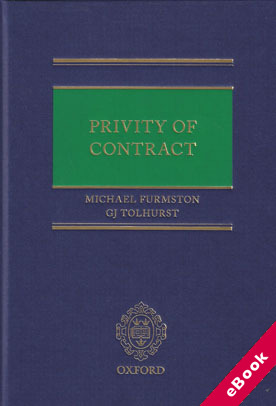
This book, based on English law of contract, considers the development and present state of the doctrine of Privity of Contract with clear references to cases in other major common law jurisdictions (Australia, Canada, New Zealand and Singapore). The work opens with a history of development of the privity rule and its place in English up to the enactment of the Contract (Right of third parties) Act 1999.
The book considers common law and statutory exceptions in detail as well as major statutory exceptions from other jurisdictions. There is also consideration of the operation of the rule with regard to exemption clauses and attempts to impose liabilities and burden on non-parties.
A large section of the book considers the rights of a promise where the loss suffered by reason of a breach of contract has been incurred by a third party. The final chapters consider the position under the Contract (Right of third parties) Act 1999 and look at the international position, considering work undertaken by UNIDROIT.
This book fills a gap for a more thorough examination of the law of privity and is written by two well-known and experienced authors on contract law.











