The eBooks we sell are sold as a single-user licence and are intended for the end user only.
The sale of some eBooks are restricted to certain countries. To alert you to such restrictions, please select the country of the billing address of your credit or debit card you wish to use for payment.
For further information see https://www.wildy.com/ebook-formats
Once the order is confirmed an e-mail will be sent to you to allow you to download the eBook. For UK purchases this will be automatic. For purchases outside the UK a member of staff will need to confirm the sale. (Staff are available to do this during normal business hours, Mon-Fri 8:30-17:00 UK time)
All eBooks are supplied firm sale and cannot be returned. If you believe there is a fault with your eBook then contact us on ebooks@wildy.com and we will help in resolving the issue. This does not affect your statutory rights.
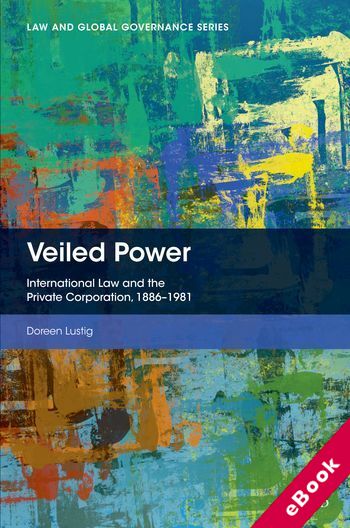
Veiled Power conducts a thorough historical study of the relationship between international law and business corporations. It chronicles the emergence of the contemporary legal architecture for corporations in international law between 1886 and 1981. Doreen Lustig traces the relationship between two legal 'veils': the sovereign veil of the state and the corporate veil of the company. The interplay between these two veils constitutes the conceptual framework this book offers for the legal analysis of corporations in international law.
By weaving together five in-depth case studies - Firestone in Liberia, the Industrialist Trials at Nuremberg, the Anglo-Iranian Oil Company, Barcelona Traction and the emergence of the international investment law regime - a variety of contexts are covered, including international criminal law, human rights, natural resources, and the multinational corporation as a subject of regulatory concern. Together, these case studies offer a multifaceted account of the history of corporations in international law over time.
The book seeks to demonstrate the facilitative role of international law in shaping and limiting the scope of responsibility of the private business corporation from the late-nineteenth century and throughout the twentieth century. Ultimately, Lustig suggests that, contrary to the prevailing belief that international law failed to adequately regulate private corporations, there is a history of close engagement between the two that allowed corporations to exert influence under a variety of legal regimes while obscuring their agency.