
The eBooks we sell are sold as a single-user licence and are intended for the end user only.
The sale of some eBooks are restricted to certain countries. To alert you to such restrictions, please select the country of the billing address of your credit or debit card you wish to use for payment.
For further information see https://www.wildy.com/ebook-formats
Once the order is confirmed an e-mail will be sent to you to allow you to download the eBook. For UK purchases this will be automatic. For purchases outside the UK a member of staff will need to confirm the sale. (Staff are available to do this during normal business hours, Mon-Fri 8:30-17:00 UK time)
All eBooks are supplied firm sale and cannot be returned. If you believe there is a fault with your eBook then contact us on ebooks@wildy.com and we will help in resolving the issue. This does not affect your statutory rights.
Written by a leading legal researcher, this book offers a comprehensive study of the principle, a frequently invoked but rarely analysed aspect of investment arbitration.
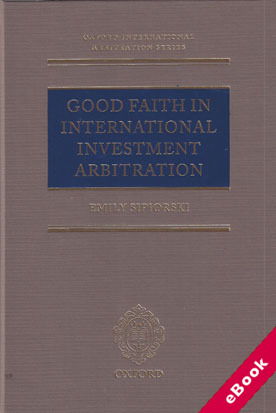
Good Faith in International Investment Arbitration is a thorough and expansive study that considers the application of good faith by arbitral tribunals and parties in international investment disputes, encompassing both procedural and substantive aspects of good faith.
Expertly negotiating a complex principle, this book diligently follows the arbitral process from jurisdiction through merits and to cost decisions, identifying the various applications of good faith in investment disputes. The author offers detailed analyses of the role of good faith in defining nationality and investor as well as in pre-dispute admissibility requirements.
The study then delves into the ways the principle guides parties' arguments and informs tribunals' decisions regarding evidence, substantive protections, and costs. It further addresses the role of good faith in the behaviour of arbitrators and other actors.
This is an essential guide for anyone wishing to understand this important principle that has accompanied the developing system of international investment law.











