
The eBooks we sell are sold as a single-user licence and are intended for the end user only.
The sale of some eBooks are restricted to certain countries. To alert you to such restrictions, please select the country of the billing address of your credit or debit card you wish to use for payment.
For further information see https://www.wildy.com/ebook-formats
Once the order is confirmed an e-mail will be sent to you to allow you to download the eBook. For UK purchases this will be automatic. For purchases outside the UK a member of staff will need to confirm the sale. (Staff are available to do this during normal business hours, Mon-Fri 8:30-17:00 UK time)
All eBooks are supplied firm sale and cannot be returned. If you believe there is a fault with your eBook then contact us on ebooks@wildy.com and we will help in resolving the issue. This does not affect your statutory rights.
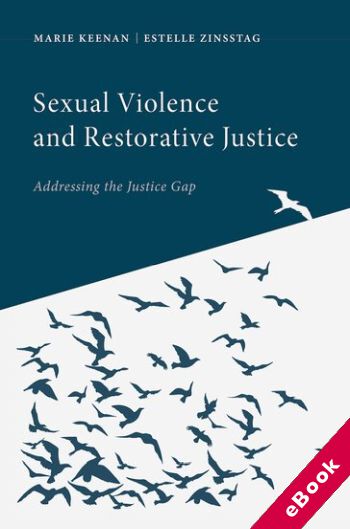
Concerned by the high attrition rates for sexual crime and the secondary victimization experienced by victims during their participation in the criminal justice system, this book analyses the extent to which restorative justice can address the justice gap that exists in current justice provision.
Building on clinical experience and earlier research on sexual crime the authors engage with the complex dynamics and traumatic impact of sexual crime as a critical starting point for their research and examine whether restorative justice can contribute to a more enhanced justice response.
The book presents extensive new data on restorative justice as applied in sexual violence cases across the globe. It engages with feminist concerns regarding the traumatic impact of sexual violence and the power imbalances that characterise these offences, as well as the potential for re-traumatisation and re-victimisation during the judicial process. While there is a risk of coercion of the victim to participate in the process, and manipulation of restorative justice by the offender, restorative justice has the potential to lead to the reprivatisation of sexual crime and ultimately to its decriminalisation.
Having examined these topics in detail, the book concludes there is an important role for restorative justice in addressing the justice gap that exists after sexual crime and offers guidance on how this can be achieved.











